13 Minimalist Room Designs That Bring Calm and Style to Your Home
Minimalism is not about empty rooms — it is about rooms where everything left in them earns its place. A minimalist room feels calm the moment you walk in, not because there is nothing to look at, but because nothing is competing for your attention. These 13 minimalist room designs work in real homes, with real budgets, and each one can be started this weekend. Pick the ideas that fit your room, leave the rest, and let the space breathe.
1. Start With a Neutral Base
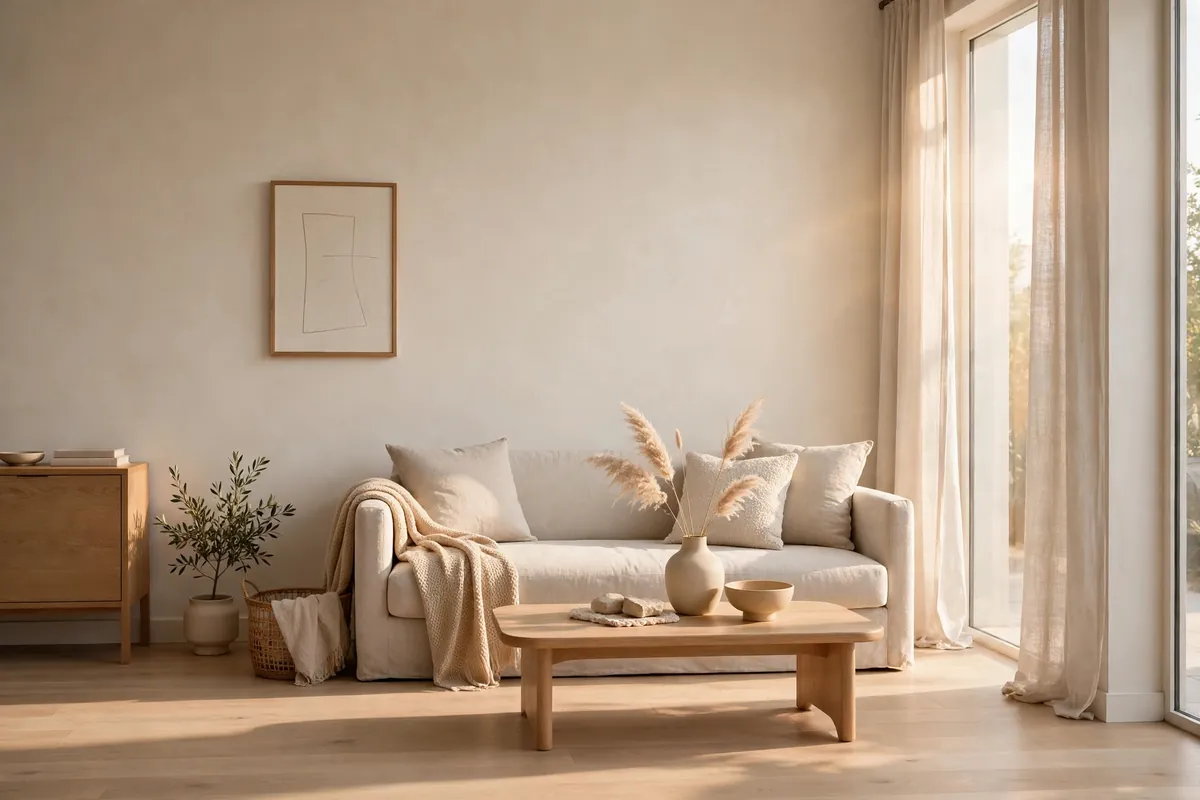
Every calm room starts with a quiet background. Warm white walls, a pale wood floor, and one soft neutral for the larger furniture give the eye somewhere to rest, and everything you add afterwards looks intentional rather than accidental. Avoid stark, cold white — it reads as unfinished — and choose a warm white with a hint of cream instead. Keep the ceiling the same colour as the walls so the room feels taller, and let one texture, such as linen or light oak, repeat through the space. Our room colour scheme ideas show how a neutral base can still feel warm and layered.
2. Choose One Focal Point Per Room
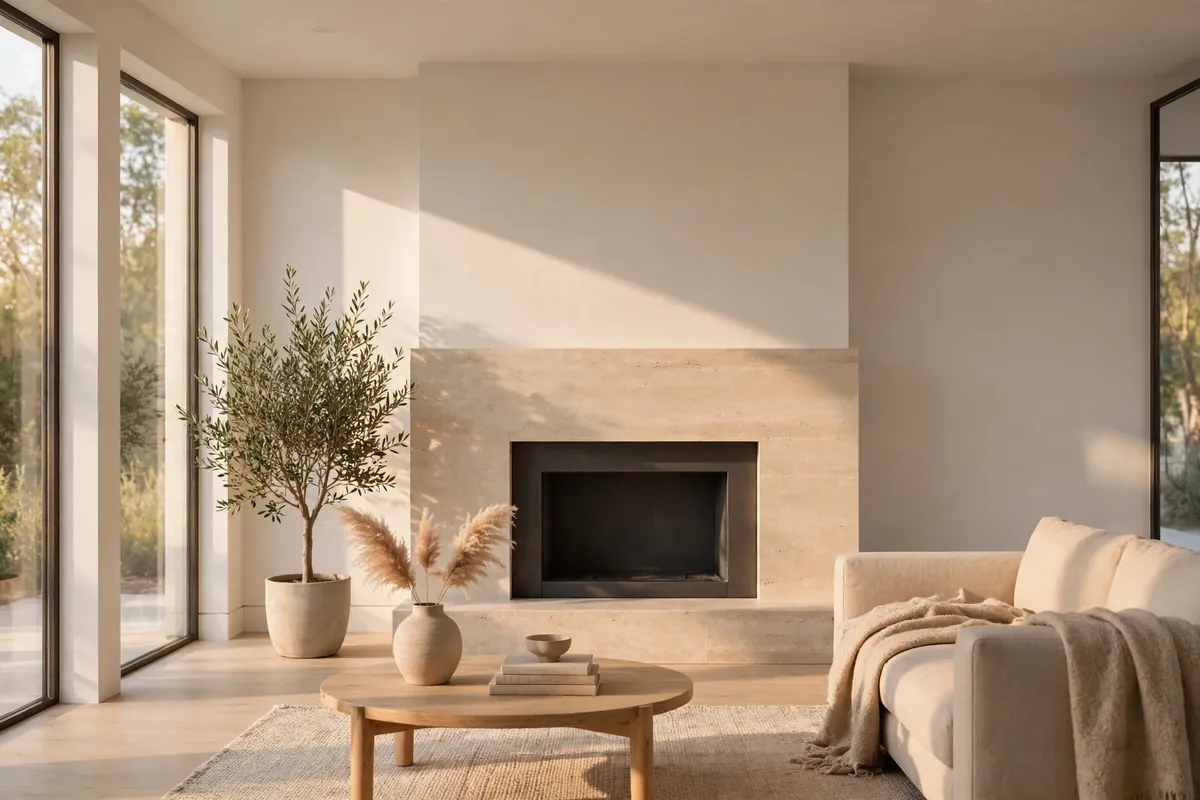
A room with five focal points has none. Choose one — a fireplace, a large window, a piece of art, or a beautiful sofa — and arrange everything else to support it. The focal point should be the first thing you see from the door, and nothing else in the room should be as tall, as dark, or as detailed. This single decision does more for calm than any amount of decluttering, because it tells the eye where to go and where to stop. If the room already has a strong feature, such as a bay window, let that be the anchor and keep the furniture low and quiet around it.
3. Let Natural Light Do the Decorating
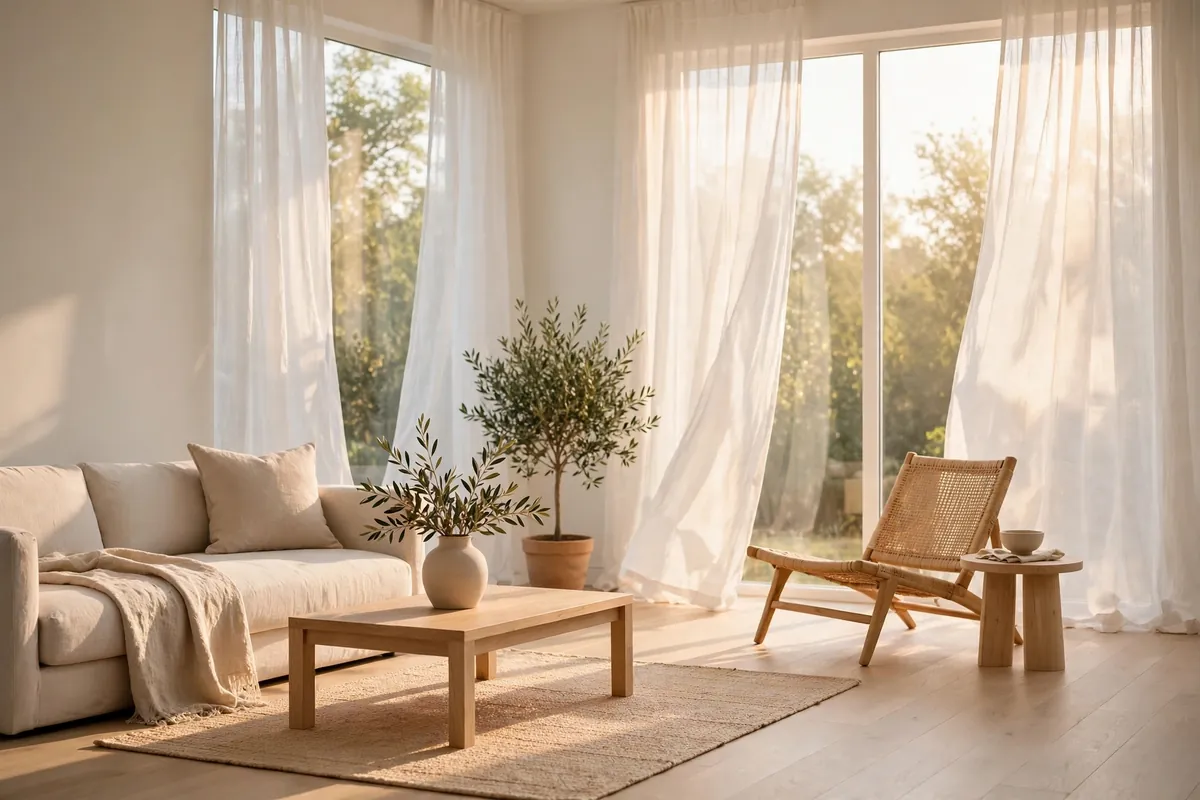
Light is the cheapest decoration in a minimalist home, and the most powerful. Sheer linen curtains, a mirror placed opposite a window, and pale surfaces that bounce light around the room can make a small space feel twice its size. Keep windowsills clear, skip heavy pelmets, and clean the glass — it sounds obvious, but a clean window changes a room more than a new cushion does. In the evening, use one warm lamp rather than a bright overhead light, so the room keeps the same soft feeling after dark.
4. Keep Furniture Low and Clean-Lined
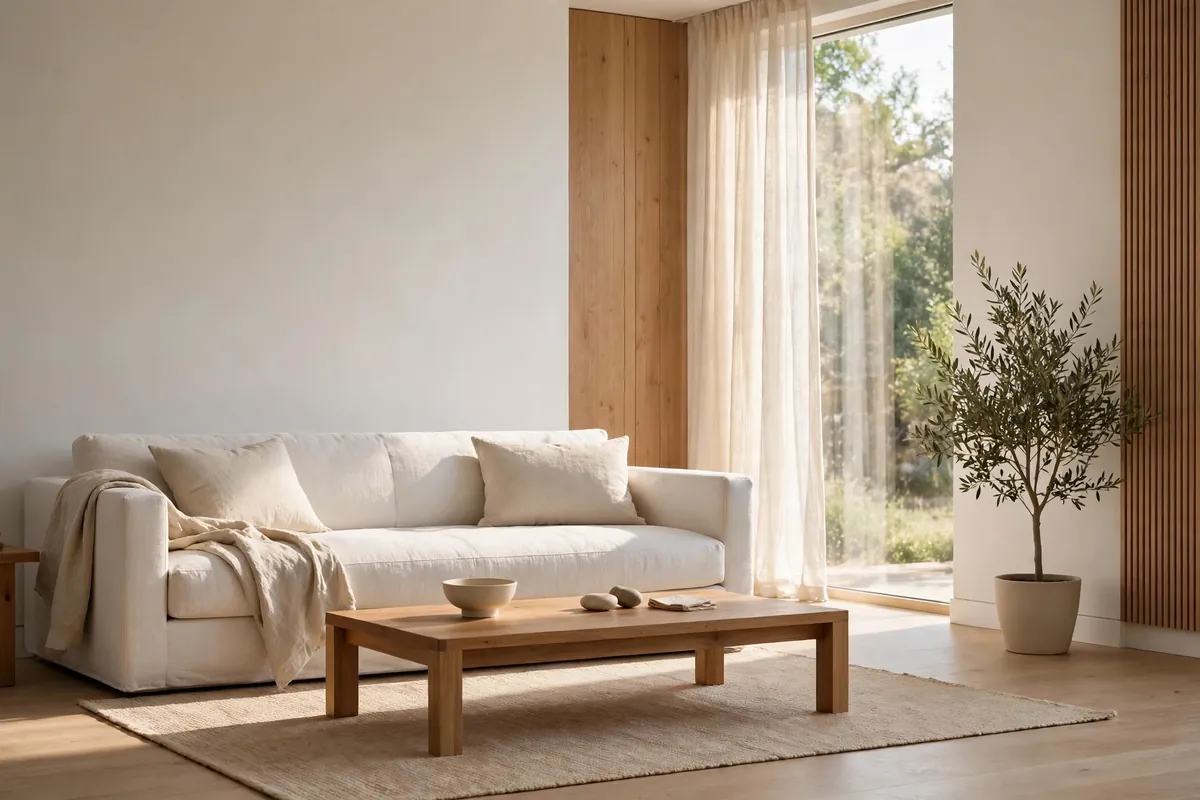
Low furniture makes a room feel spacious because it leaves more wall visible, and the wall is part of the design in a minimalist home. Choose sofas and beds with straight arms, slim legs, and no fussy detailing, and keep the profile of each piece simple enough that you could describe it in one sentence. One well-made low sofa beats three ornate chairs, and a simple platform bed beats a tall headboard with carvings. Leave a clear gap between the furniture and the wall where you can, so each piece reads as an object rather than clutter.
5. Hide Storage Behind Plain Fronts
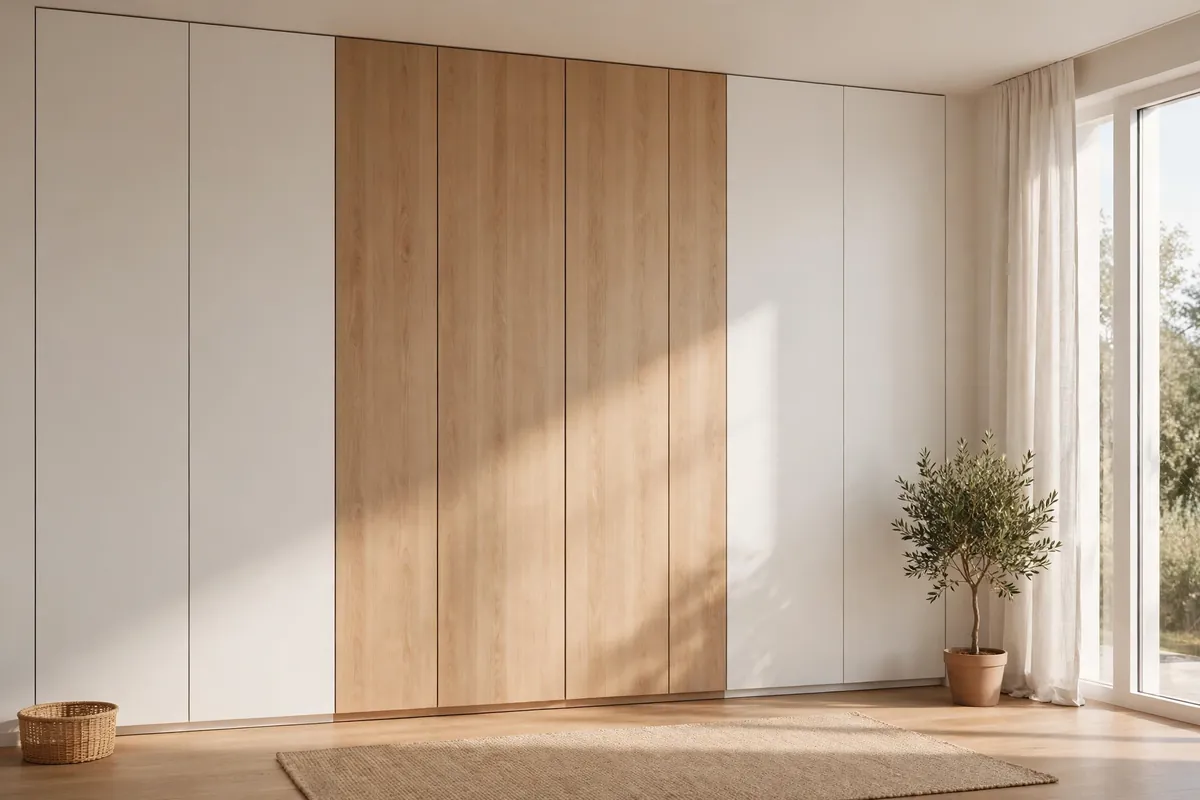
Minimalism fails when everyday life has nowhere to go, so storage is the design, not an afterthought. Handleless cabinets, a wardrobe that runs wall to wall, and a bench with a lift-up lid keep the things you use every day out of sight without a daily tidy-up. The rule is simple: if you use it every day, it lives behind a door; if you use it once a week, it lives in a closed box. Open shelving looks calm only when it holds very little, so keep most storage closed and let one or two open shelves carry the decoration. Our cozy bedroom decor ideas use the same closed-storage trick to keep a small bedroom feeling restful.
6. Use Texture Instead of Pattern
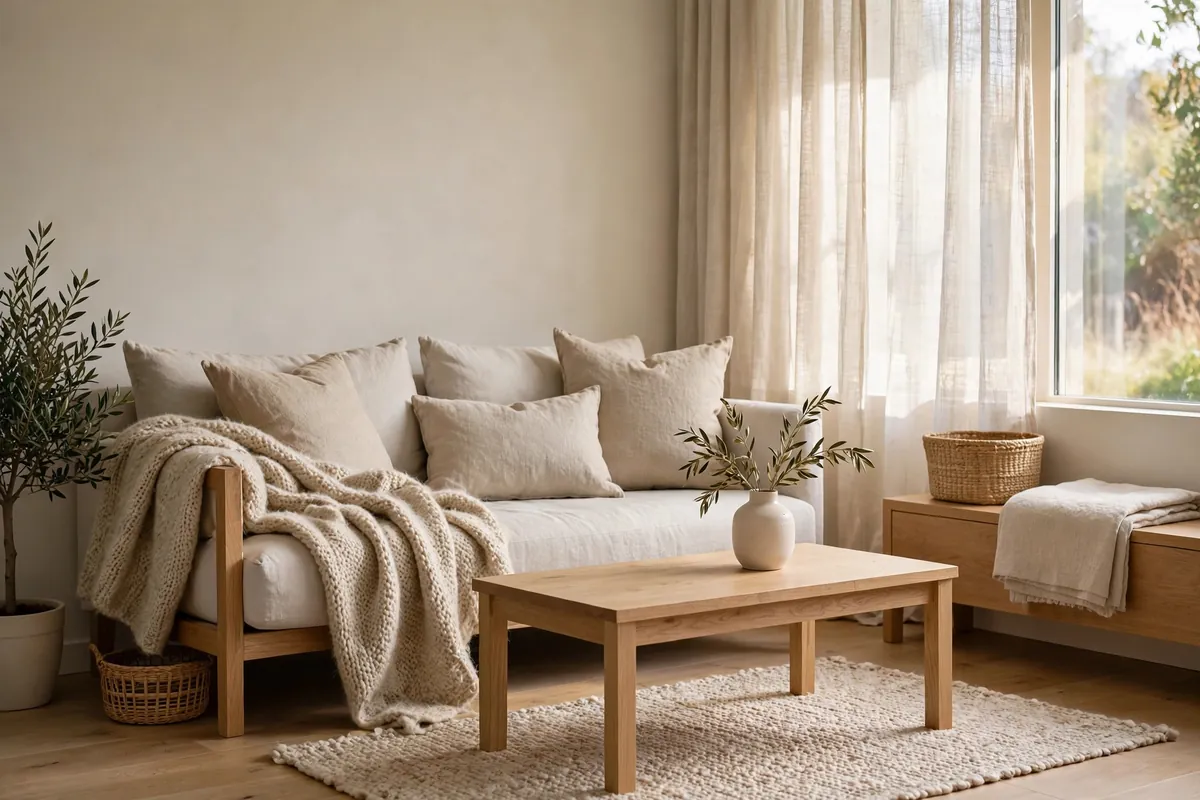
When colour and pattern step back, texture steps forward. A linen sofa, a wool throw, a rattan basket, and a smooth oak table give a neutral room all the interest it needs, and they do it quietly. Mix three textures in every room — one soft, one rough, one smooth — and repeat them so the room feels connected rather than random. Texture also ages better than pattern: a plain linen cushion still looks good in five years, while a bold print dates quickly. Touch is part of the design here, so choose materials you actually enjoy touching.
7. Leave Breathing Space Around Objects
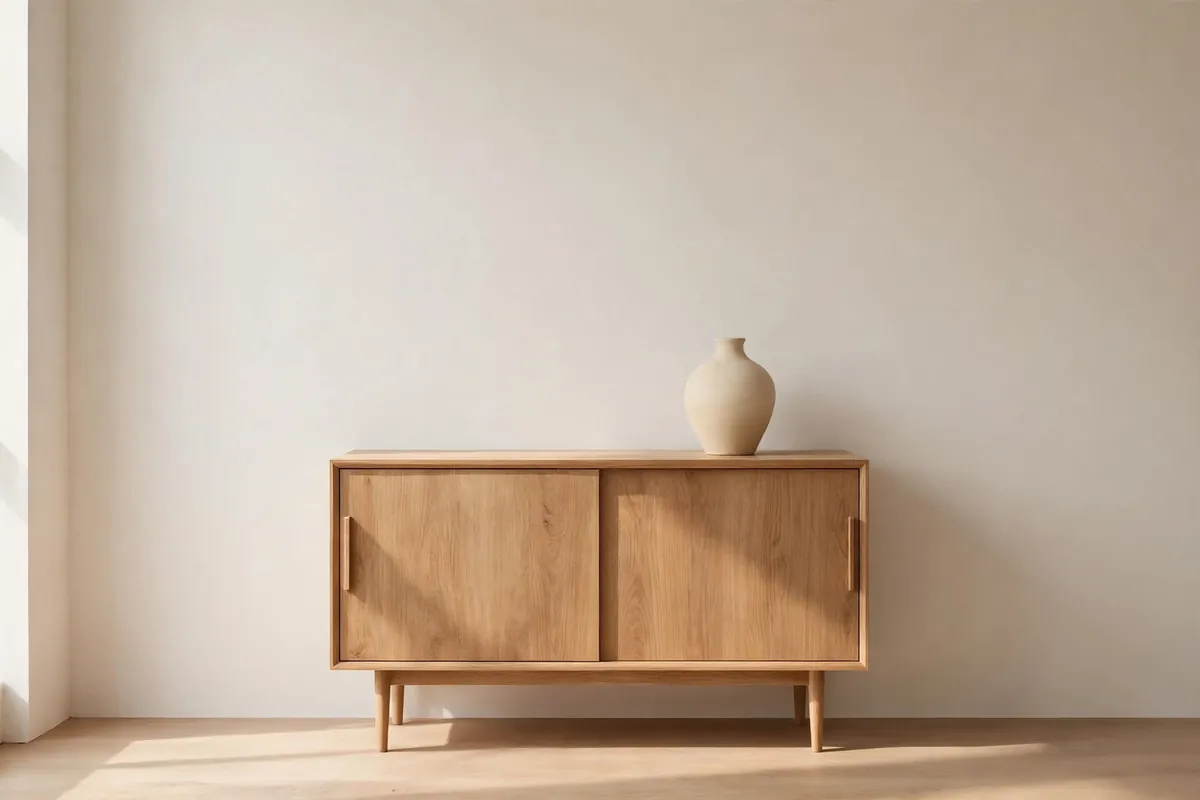
The empty space around an object is what makes it look valuable. A single vase on a sideboard, with nothing else on it, looks like a gallery piece; the same vase crowded between five other objects looks like clutter. Give every decorative object at least a hand’s width of clear surface around it, and leave some shelves and surfaces completely empty on purpose. This is the hardest minimalist habit to learn, because an empty surface feels unfinished at first — but after a week, it feels like the room can finally breathe, and you will not want to fill it again.
8. Pick a Palette of Three Colours
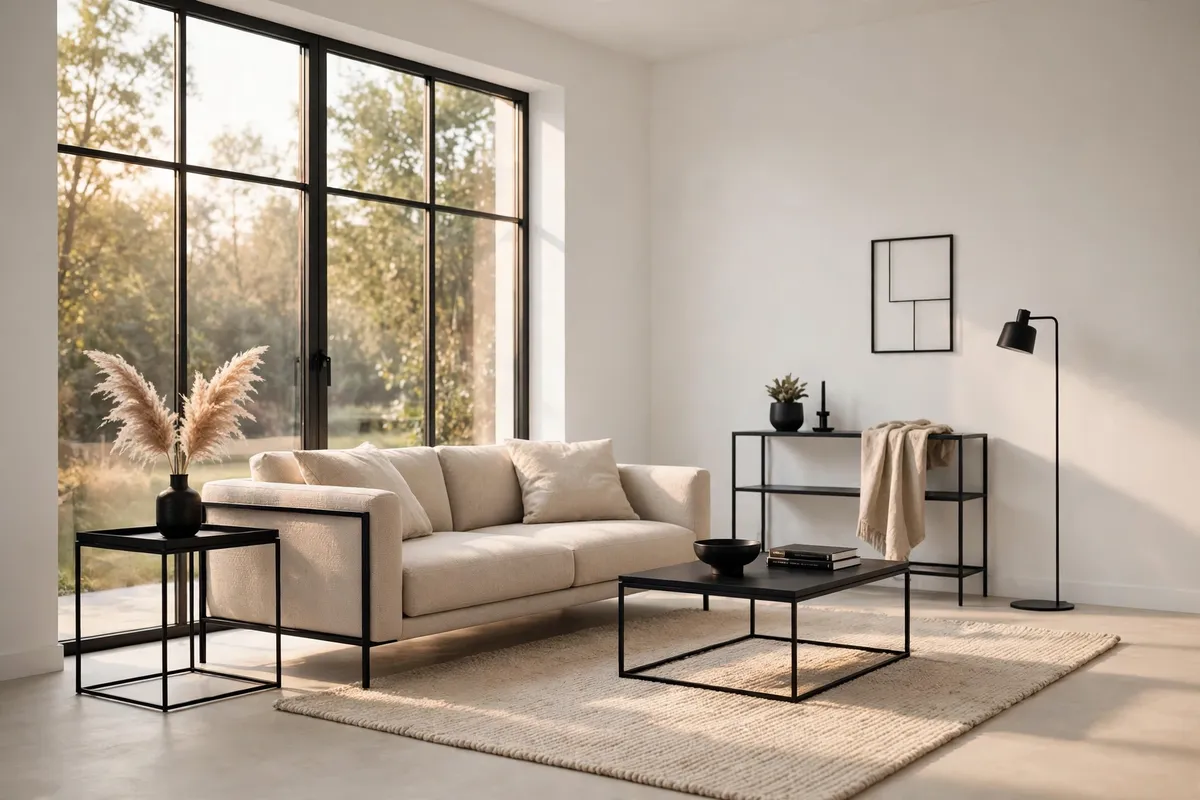
Three colours are enough for any room: a dominant neutral for walls and large furniture, a second neutral for textiles and wood, and one accent that appears in small amounts — a deep green, a warm terracotta, or a soft black. The accent should appear in at least three places, or it looks like a mistake, but it should never cover more than a tenth of the room. This discipline is what makes minimalist rooms feel designed rather than bare, and it makes shopping easier too: if a cushion is not one of your three colours, it does not come home.
9. Bring In One Natural Element
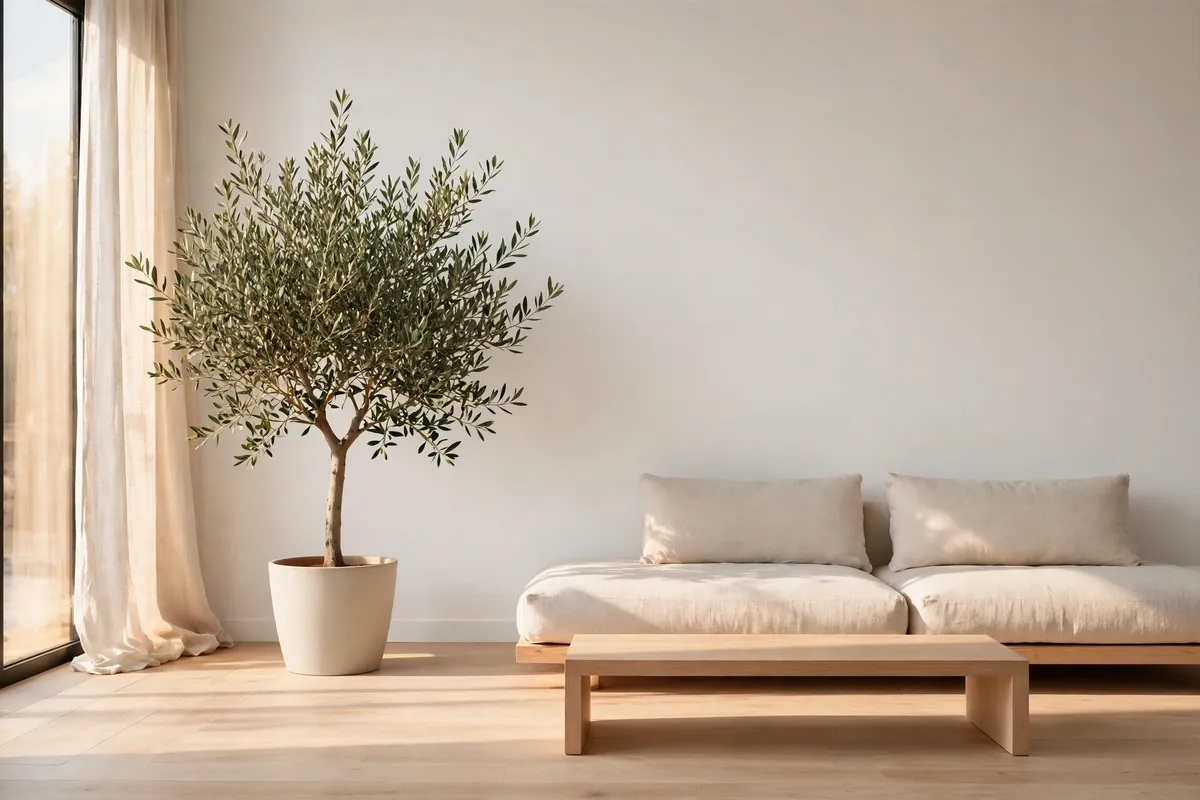
A single plant, a wooden bowl, or a stone vase stops a minimalist room from feeling cold, and one is usually enough. A tall olive tree in a plain pot, a branch in a glass bottle, or a woven basket adds life and warmth without adding visual noise. Choose plants with simple shapes — a fiddle leaf, a snake plant, or a single stem of eucalyptus — and keep the pot plain so the plant is the feature. Our low-maintenance garden ideas include several plants that survive happily indoors with very little care.
10. Keep Surfaces Mostly Clear
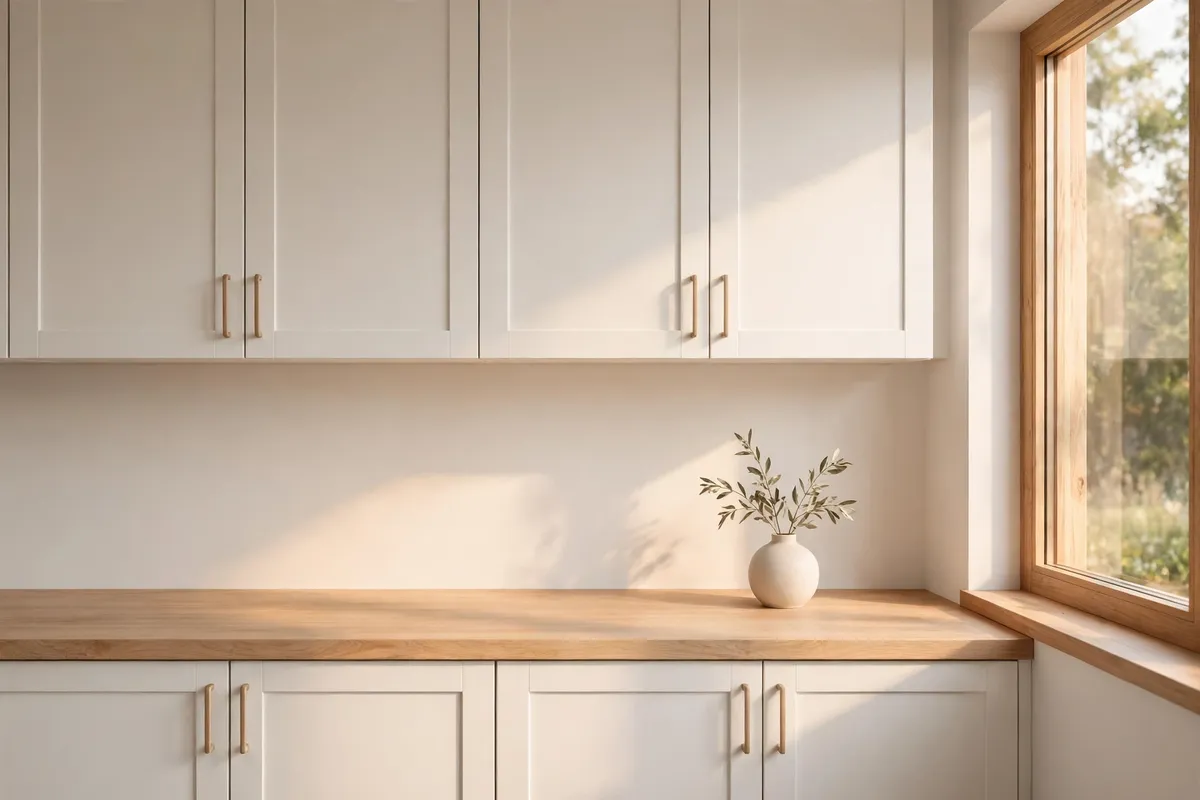
Clear surfaces are the daily practice of minimalism, and they matter more than any purchase. A kitchen worktop with nothing on it except a kettle, a bedside table with a lamp and a book, a desk with a laptop and a plant — these are the images that make a home feel calm, and they are free. The trick is to give everything a home behind a door, so clearing a surface takes thirty seconds rather than a full tidy-up. Do one surface a day, starting with the one you see first in the morning, and the habit spreads on its own.
11. Use the Same Material Twice
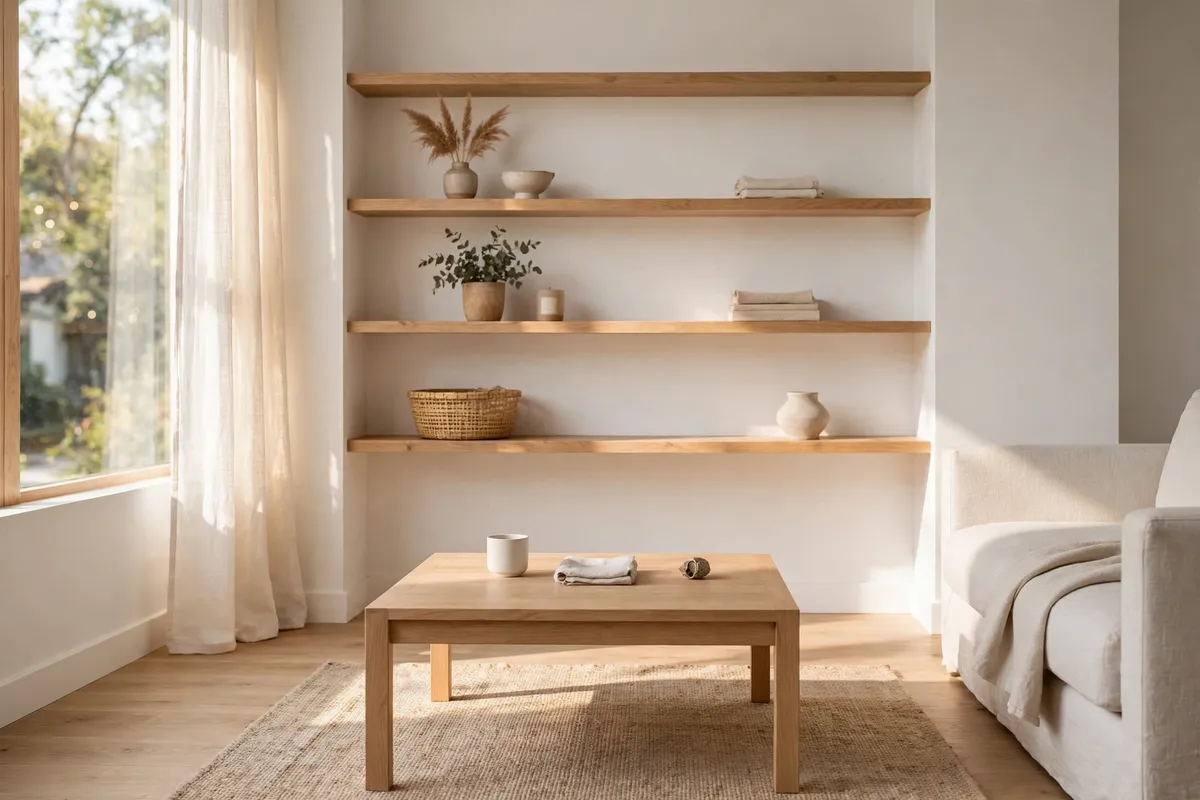
Repeating a material is the quietest way to make a room feel pulled together. Light oak in the coffee table and the shelving, black metal in the lamp and the picture frames, linen on the sofa and the curtains — each repeat ties the room together without a single matching set. Two repeats are enough; more than that, and the room starts to feel like a showroom. This is also a budget-friendly rule, because it lets you buy pieces over time: as long as the material matches, the room will still feel coherent.
12. Design the Bedroom for Sleep Only
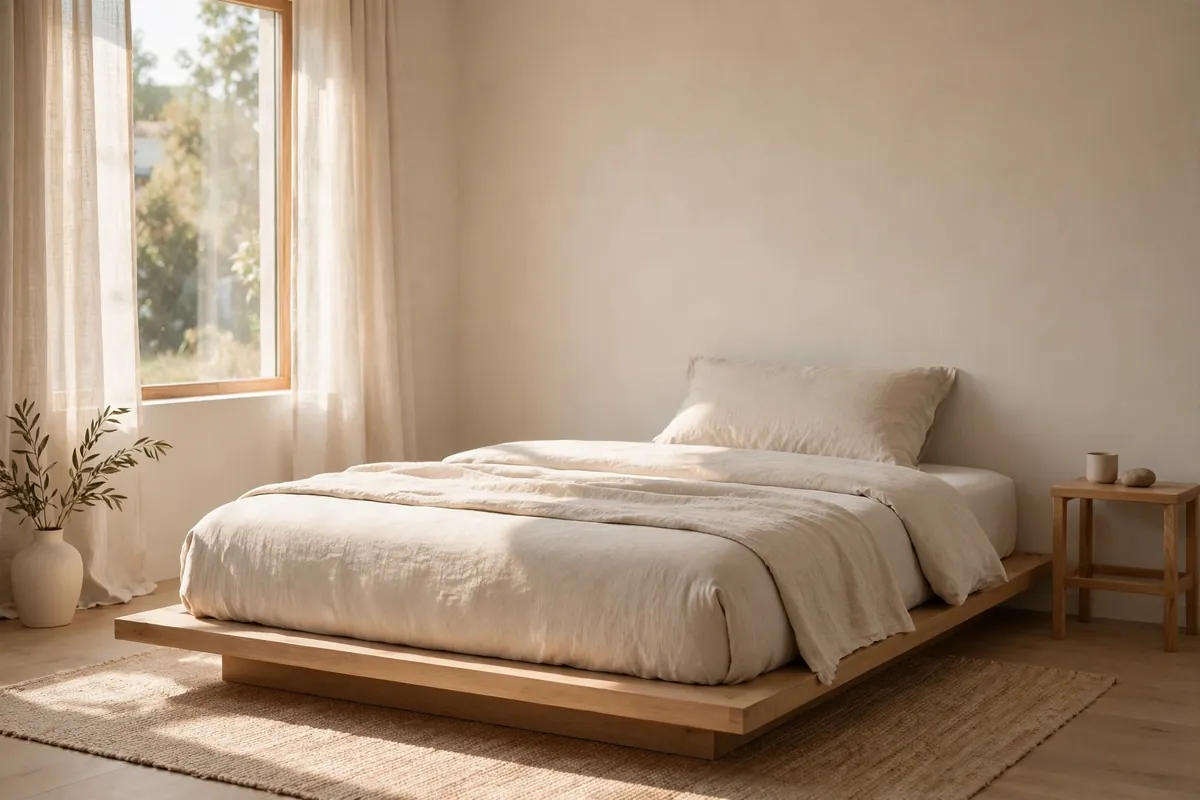
The bedroom is where minimalism pays off most, because a calm bedroom is a better night’s sleep. Keep the bed low, the bedding plain, and the bedside tables to one object each — a lamp, or a book, never both plus a phone charger, a glass, and a pile of letters. Remove the chair that collects clothes, the desk that invites work, and anything that reminds you of the day. A dark, plain curtain and a single piece of quiet art are all the decoration a bedroom needs, and the room will feel like a place to rest the moment the lights go down.
13. Edit One Thing Out Every Week
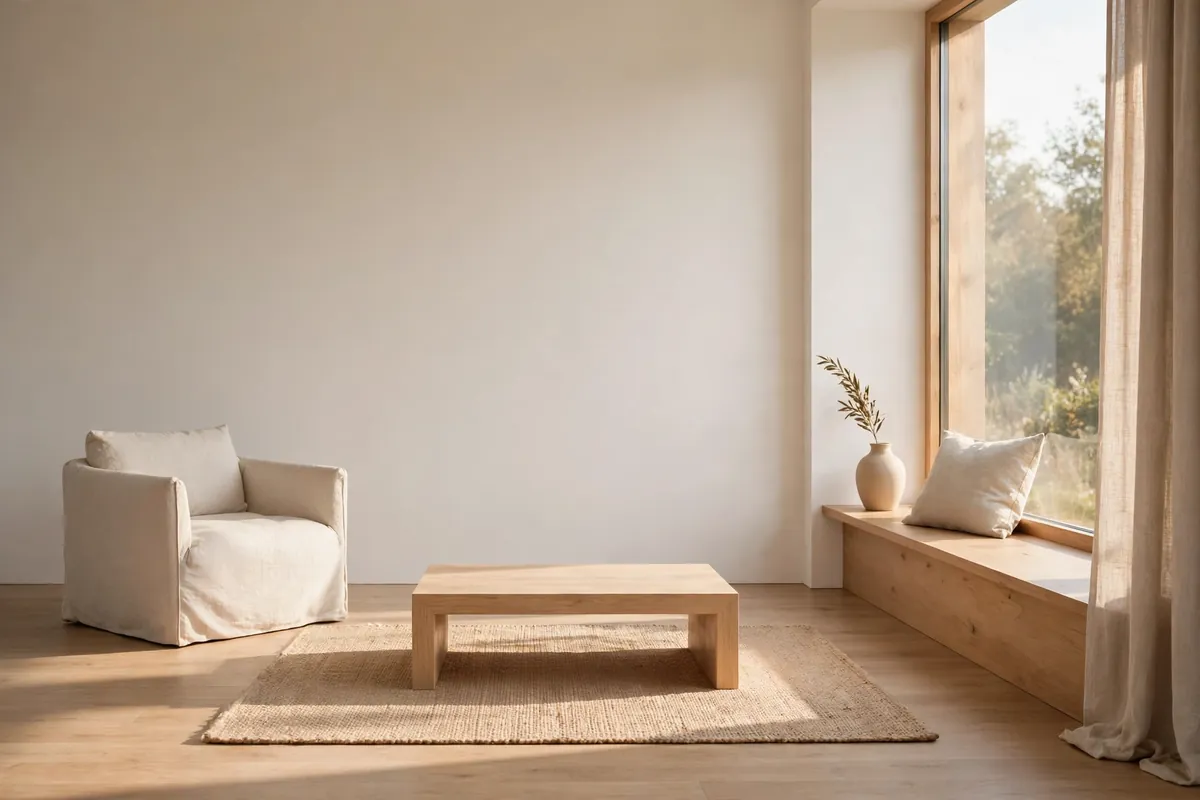
Minimalism is a habit, not a one-time clear-out. Once a week, walk through one room and remove a single thing — a cushion, a frame, a candle, a chair that nobody sits on — and live without it for a week. If you miss it, it comes back; if you do not, it leaves the house. Over a year, that is fifty small decisions, and the room gets calmer without ever feeling like a project. The 2026–2027 approach to minimalism is exactly this: fewer things, chosen well, edited often. Our DIY living room decor ideas pair well with this habit, because a room you have edited yourself is a room you will keep calm.
Minimalist rooms are not about having less for the sake of it — they are about having room for the life that happens in them. Start with the neutral base, choose one focal point, and let the light in; the rest is editing, one small decision at a time. The calm you are looking for is already in the room, underneath the things that do not need to be there.