15 Stunning Bathtub Ideas to Transform Your Bathroom
A bathroom remodel lives or dies by its bathtub. It is the largest object in the room, the first thing your eye lands on, and the place where a long day finally ends. In 2026 and 2027, bathroom design has moved firmly toward the spa: sculptural shapes, natural materials, warm light, and layouts that treat bathing as a ritual rather than a chore. Whether you are planning a full gut renovation or a weekend refresh, the right tub choice sets the tone for everything else, from tile to taps to towels.
This guide covers fifteen bathtub ideas that work in real homes, from statement freestanding tubs to clever small-bathroom solutions and budget-friendly upgrades, with practical notes on space, materials, and cost.
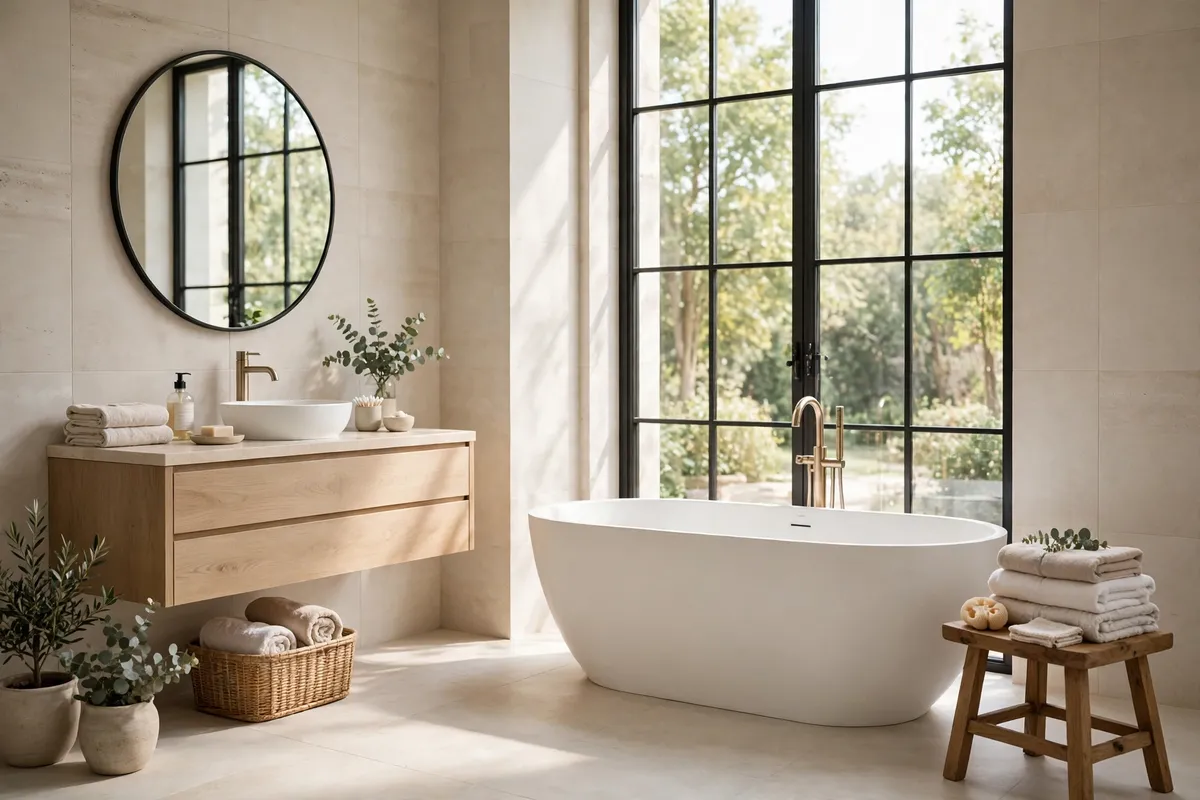
1. Make a Freestanding Tub the Star
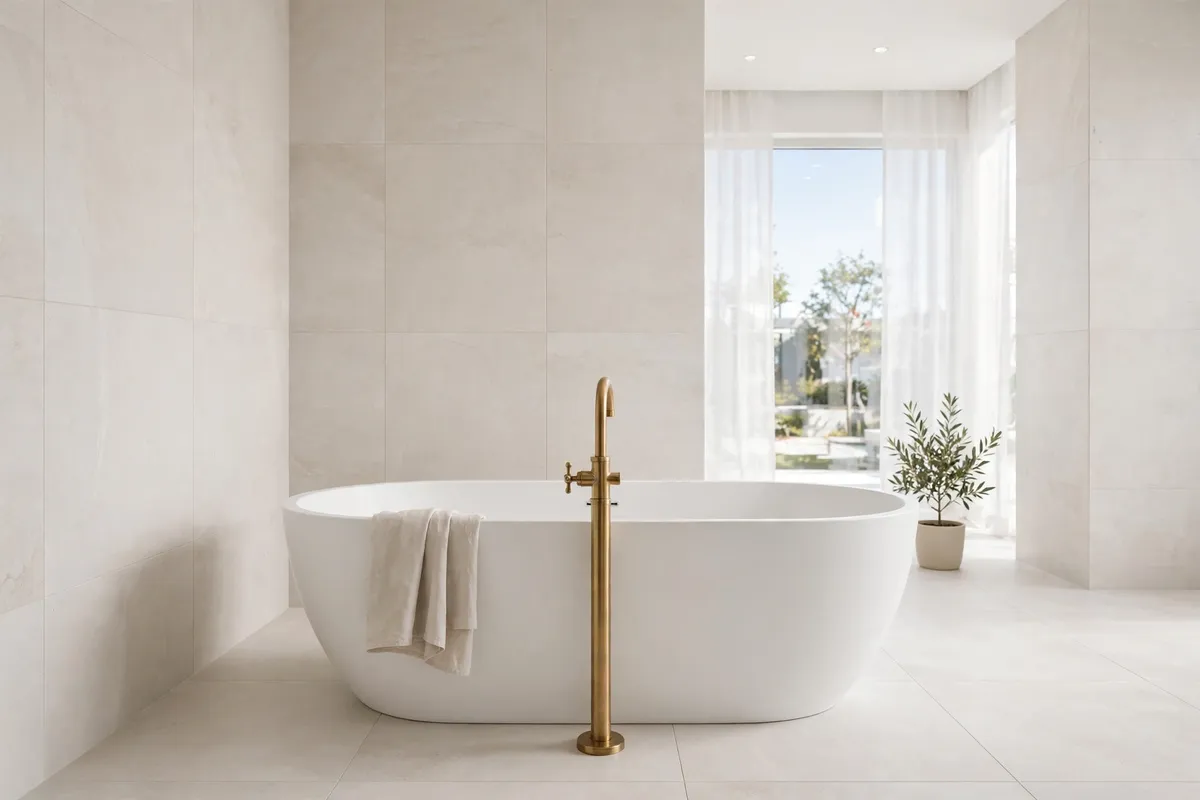
Nothing transforms a bathroom faster than a freestanding tub. Freed from walls and tile surrounds, an oval or egg-shaped tub reads like sculpture, and it instantly makes the room feel like a boutique hotel. Freestanding tubs suit medium and large bathrooms best, since you need roughly 10 to 15 centimeters of clearance on all sides for cleaning and plumbing access. Pair one with a floor-mounted filler tap in brushed brass or matte black, and keep surrounding surfaces calm so the tub keeps the spotlight. Acrylic versions are light and affordable.
2. Go Deep with a Soaking Tub
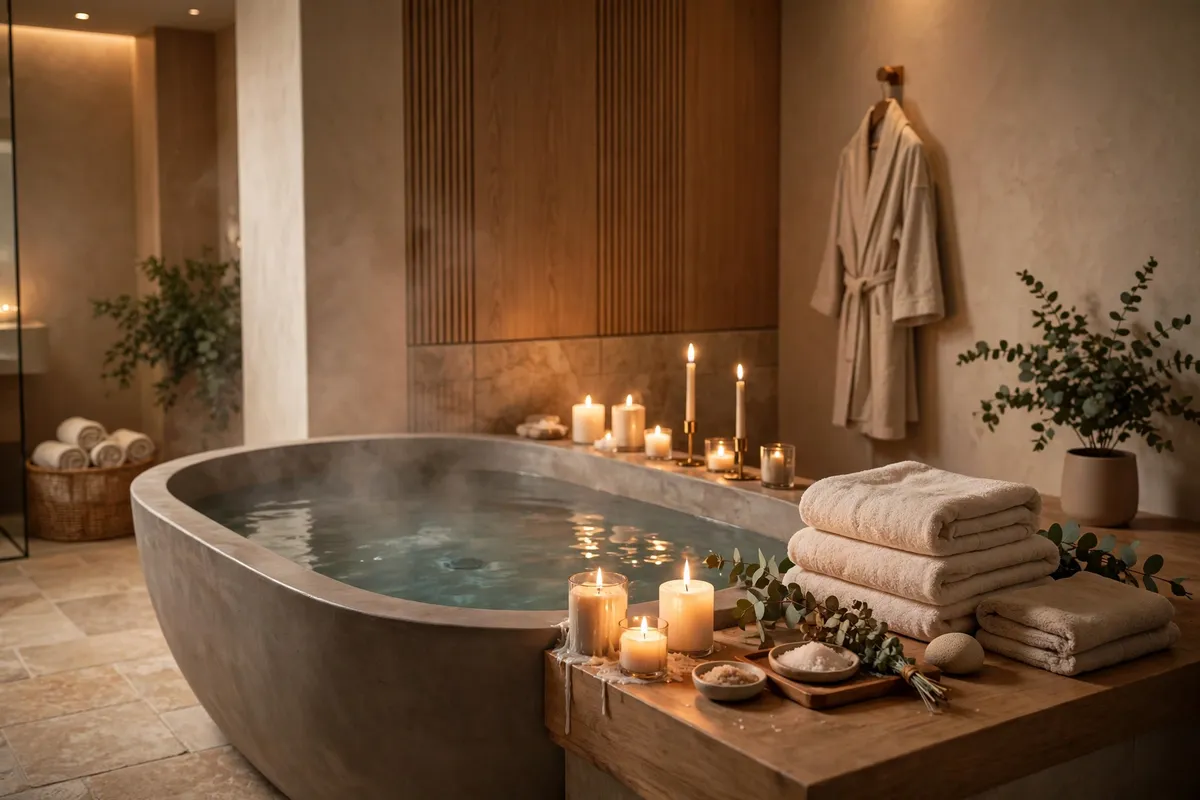
A soaking tub is deeper than a standard tub, usually 60 centimeters or more, so you can sit upright with water up to your shoulders. That depth is the whole point: full immersion relaxes muscles, eases tension, and makes a twenty-minute bath feel like a genuine reset. Japanese-style soaking tubs are compact and round or square, which makes them a smart fit for smaller bathrooms that still want a luxury feel.
3. Bring Back the Clawfoot Tub
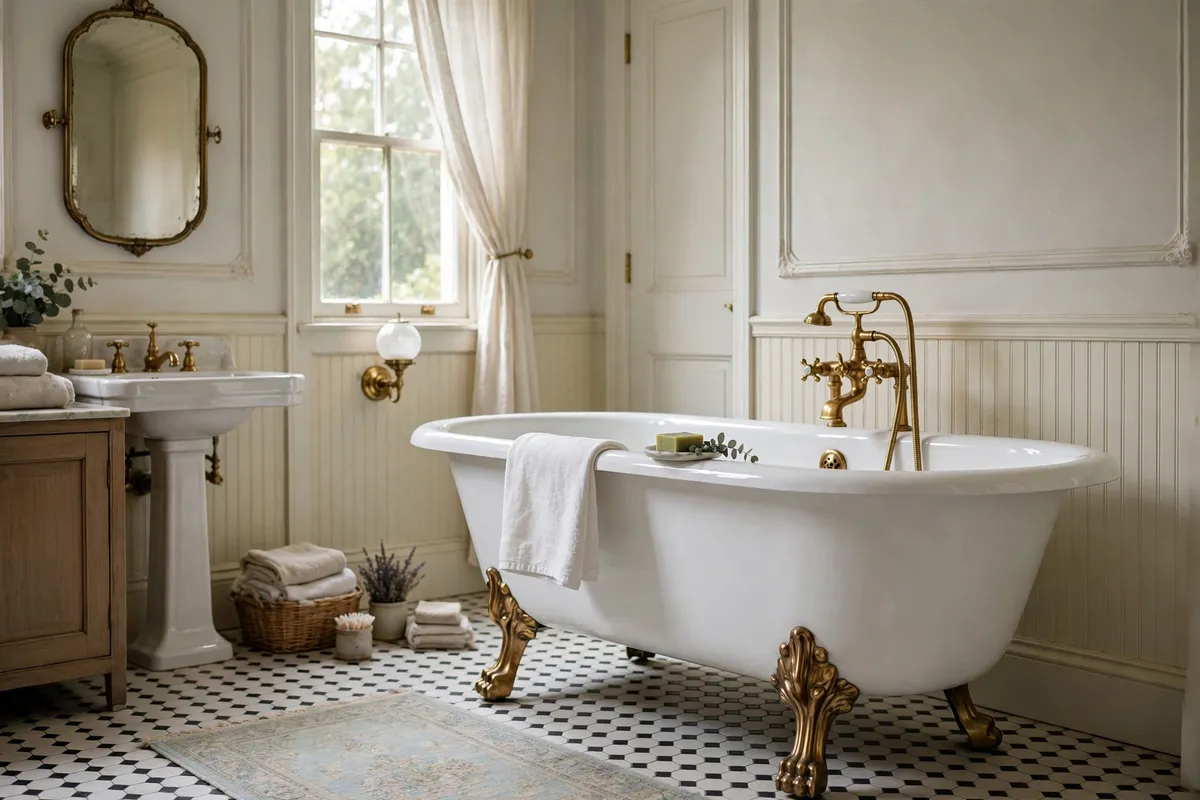
Clawfoot tubs never really left, and in 2026–2027 they are back as the centerpiece of romantic, character-filled bathrooms. The rolled rim and ornate feet add instant history, and they pair beautifully with traditional fixtures like a telephone-style hand shower and a wooden bath caddy. Modern cast-iron reproductions keep the look but add updated enamel that resists chips and stains far better than antiques. The same layered, timeworn charm that makes a clawfoot tub work is at the heart of shabby chic decor, where faded finishes and soft textiles do the decorating.
4. Choose a Walk-In Tub for Comfort and Safety
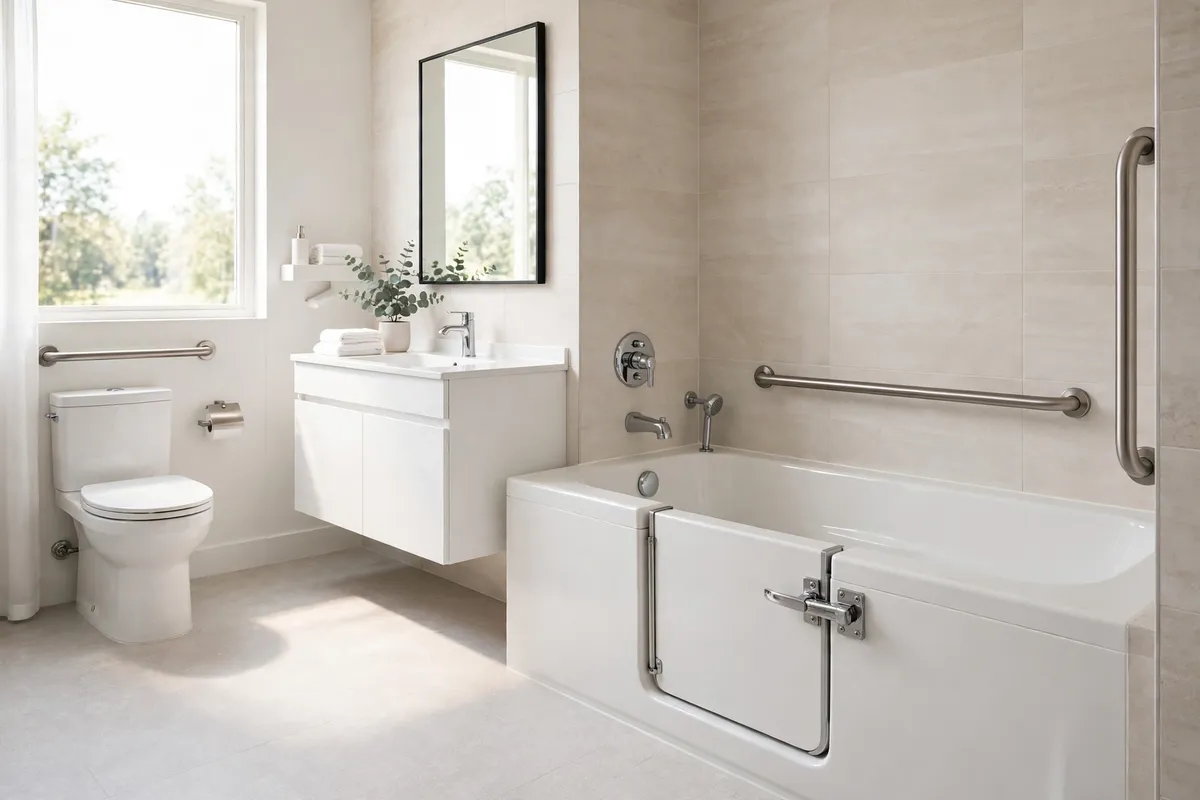
Walk-in tubs have a watertight door, a low step, and a built-in seat, which makes bathing safer and easier for anyone with limited mobility, bad knees, or simply a wish to age in place gracefully. Modern designs have moved well past the clinical look: sleek acrylic shells, frameless glass panels, and spa jets now come standard on many models. Choose a fast-fill tap and a quick-drain pump to keep waiting to a minimum, since you must sit inside while the tub fills and drains. For a forever home, a walk-in tub is one of the most practical remodel decisions you can make.
5. Try a Natural Stone Tub
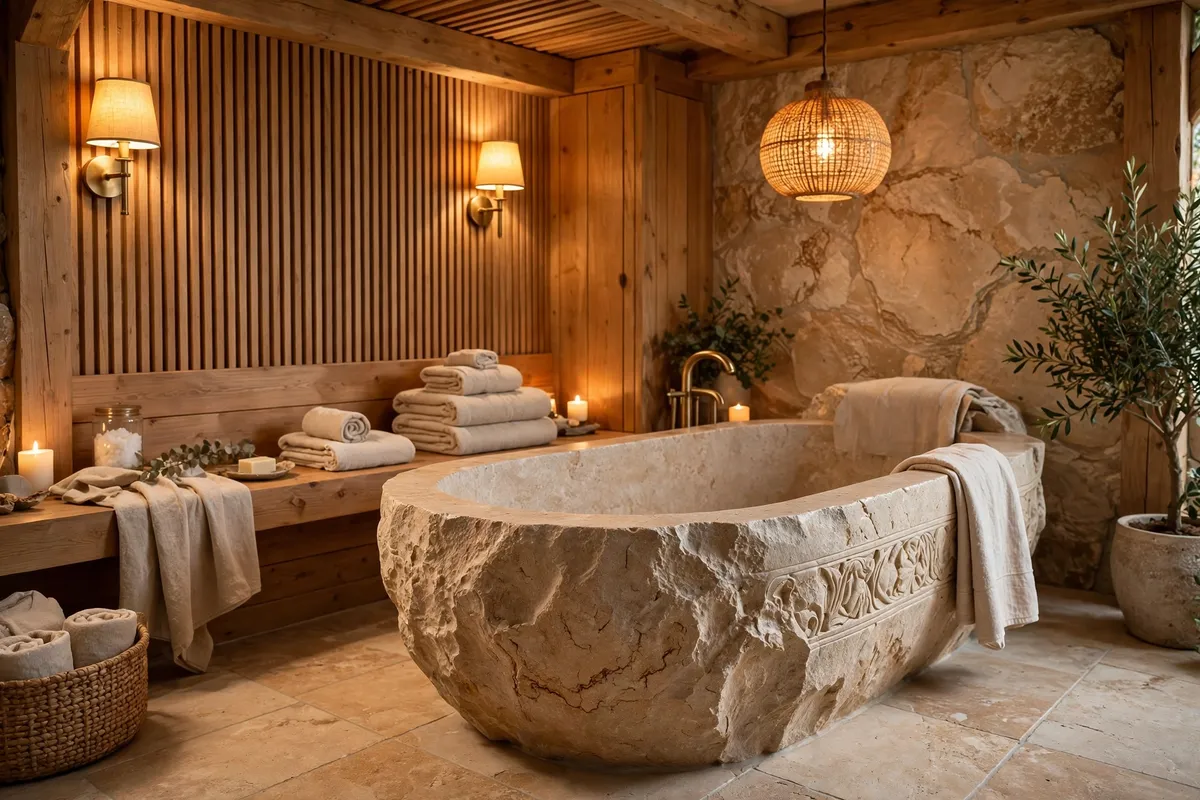
Carved from travertine, marble, or river stone, a stone tub is the most dramatic bathtub idea on this list — and the heaviest. Stone holds heat beautifully, feels cool and solid underfoot, and every piece is unique, with veining no factory can copy. Before committing, check your floor: a filled stone tub can weigh over 400 kilograms, so older joists may need reinforcing. Pair it with warm timber and linen textures to soften the monumental feel. In a large primary bathroom, a stone tub turns an ordinary remodel into a destination.
6. Warm the Room with a Copper Tub
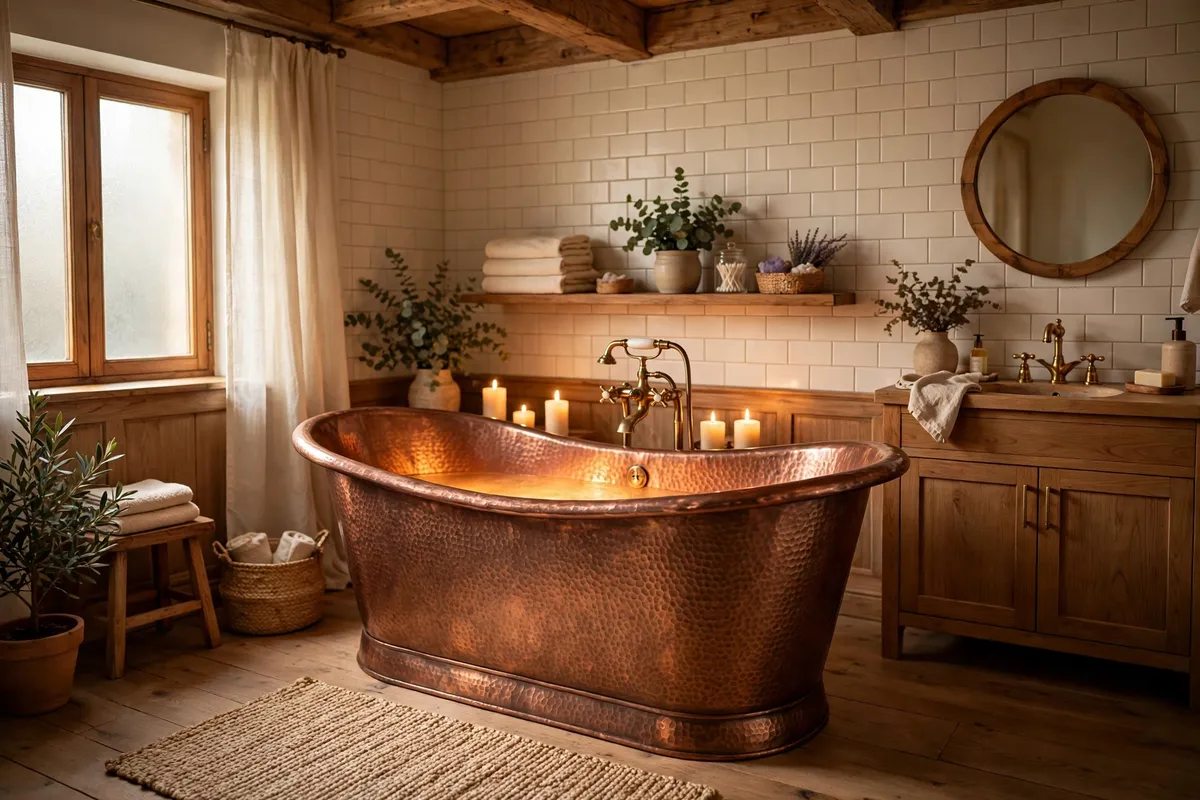
Copper tubs bring instant warmth. The hammered surface catches light in a way no other material can, shifting from rose to amber as the day changes, and the living finish develops a rich patina over time. Copper is also naturally antimicrobial and an excellent heat conductor, so baths stay warm longer with less hot water. Copper pairs best with warm woods, cream tiles, and dark bronze fixtures, and it suits farmhouse, rustic, and eclectic bathrooms alike.
7. Create a Japandi Spa Retreat
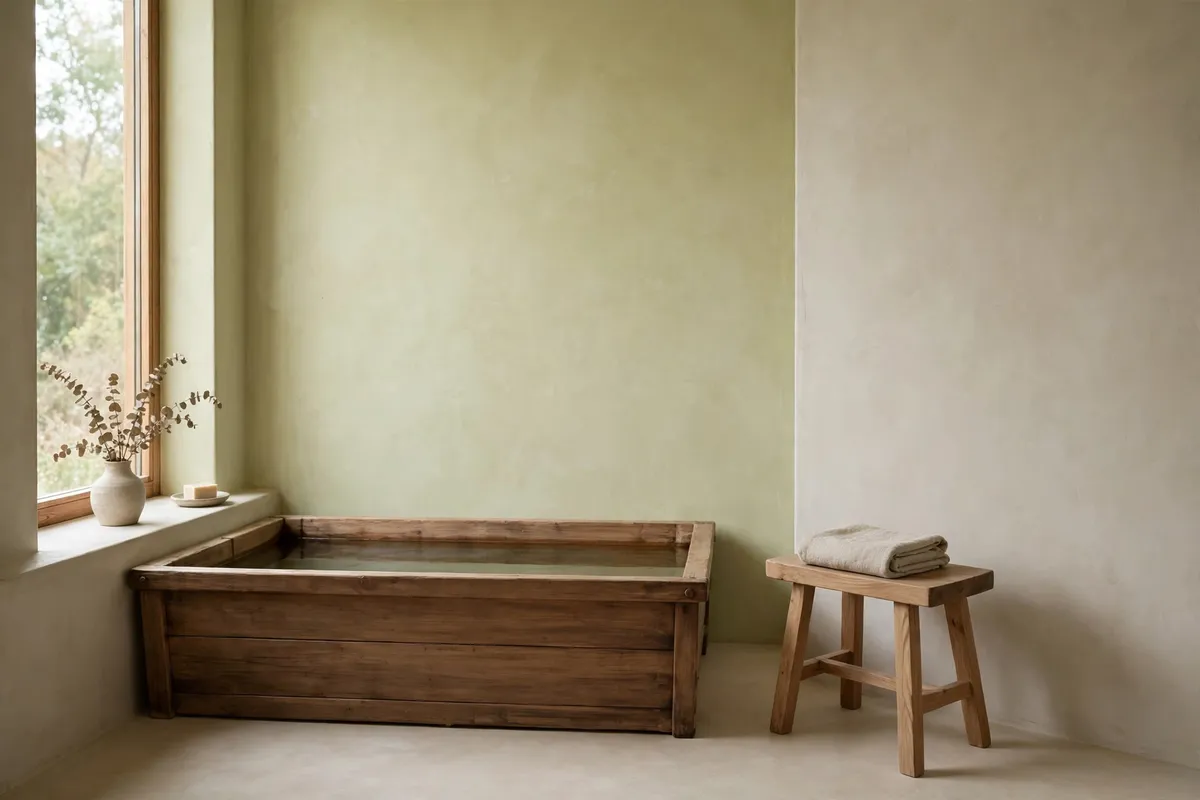
Japandi style — the calm meeting point of Japanese minimalism and Scandinavian warmth — is the defining bathroom trend of 2026–2027. Think a low wooden or stone-resin soaking tub, pale limewash walls, a single timber stool, and not one unnecessary object in sight. The palette stays soft: warm white, sand, pale oak, and stone grey. Towels are rolled, not stacked. The result feels less like a bathroom and more like a quiet room for slowing down. If your remodel goal is calm rather than drama, Japandi is the most forgiving style to live with long-term.
8. Place the Tub Beside a Window
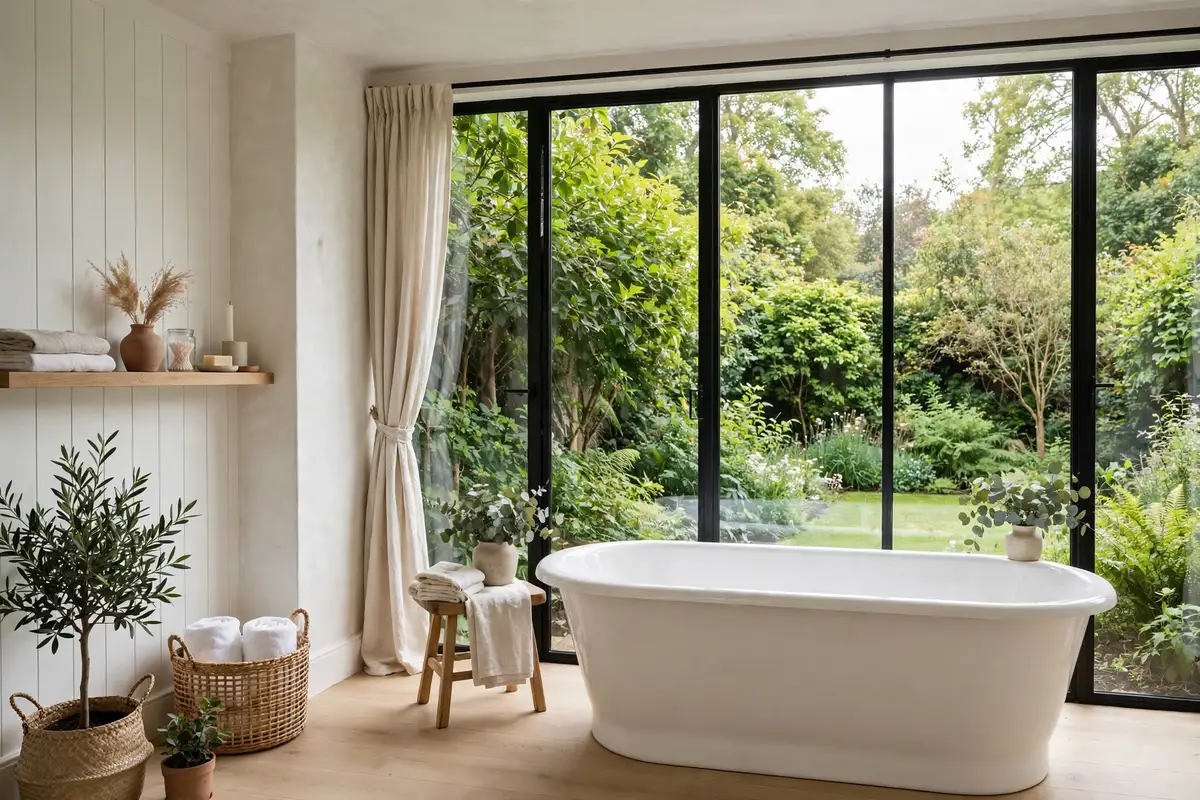
A tub beside a window turns an ordinary bath into a view. Morning light, garden greenery, or even a simple sky outlook makes the soak feel open and restorative, and it is the single most requested layout in bathroom remodels right now. Privacy is the only real concern: frosted lower panes, top-down blinds, or a sheer linen curtain keep the view while blocking sightlines. If the window is new, position the tub so the bather faces outward rather than sitting with their back to the glass. The corner becomes a true retreat — much like the quiet corners in our guide to cozy reading nooks, where one good seat and good light are all you need.
9. Upgrade a Standard Alcove Tub
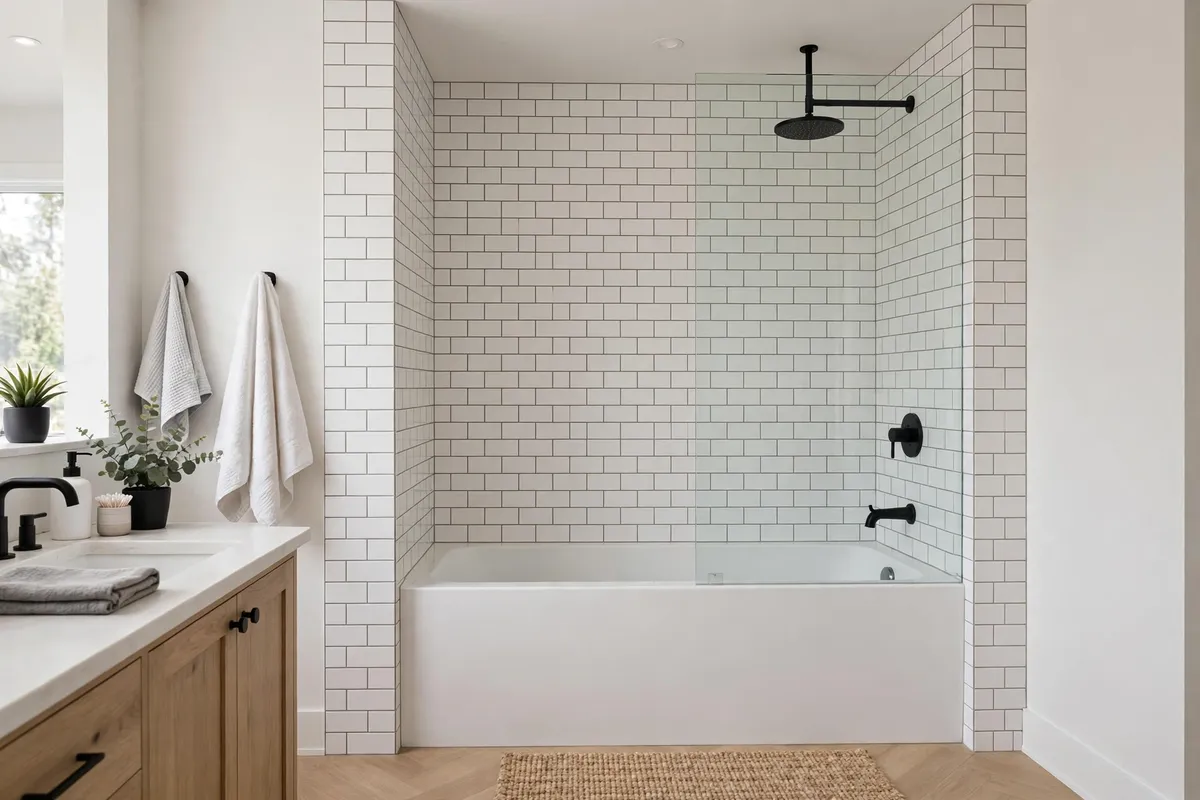
Not every remodel needs a freestanding tub. A standard three-wall alcove tub can look completely new with the right upgrades: large-format subway or zellige tiles carried to the ceiling, a frameless glass panel instead of a curtain, a rainfall showerhead above, and matte black or brushed gold fixtures. A fresh bead of silicone plus regrouting makes the whole surround look professionally finished. Alcove upgrades cost a fraction of moving plumbing, which makes them the smartest remodel move for apartments and rental-friendly renovations.
10. Combine a Shower and Tub in One Zone
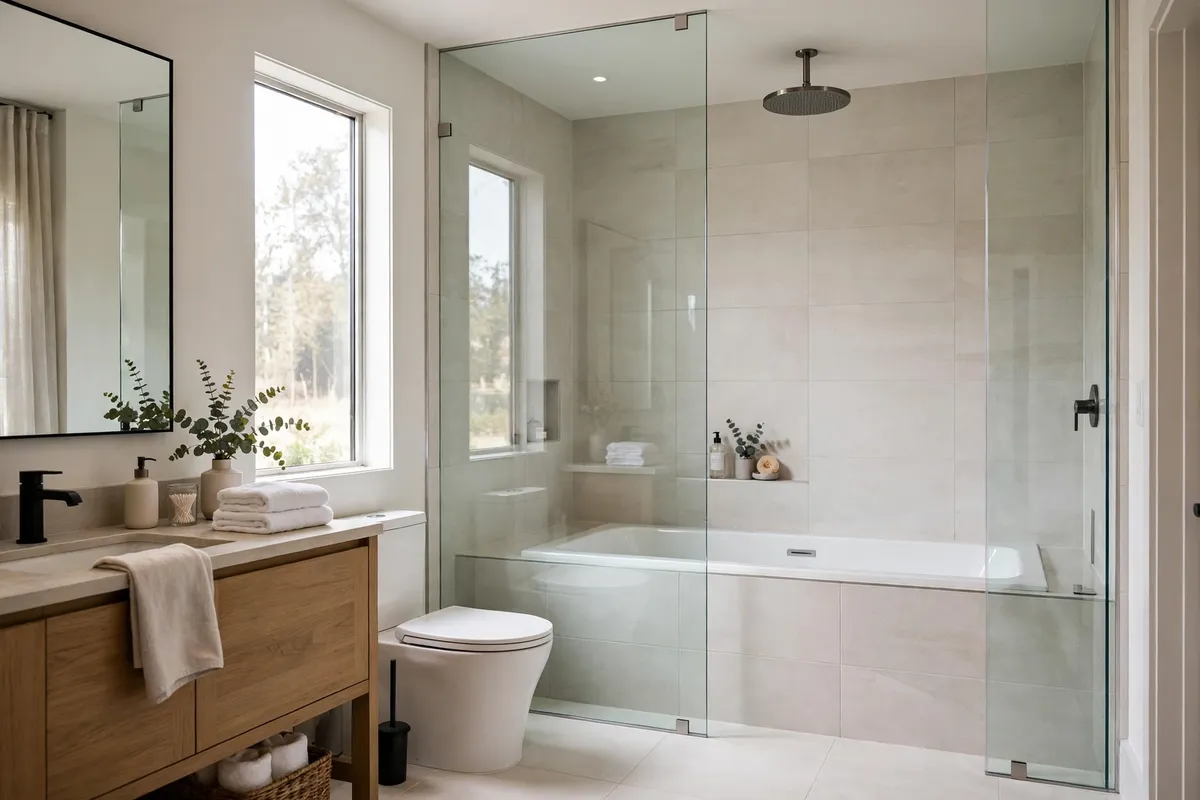
When space allows only one wet zone, a shower-tub combination does double duty without feeling like a compromise. The current approach uses a single tiled enclosure with a fixed glass screen, a rainfall head at one end, and a handheld shower on a slide rail, so the tub works for both quick showers and long soaks. Keep grout lines minimal with large tiles, and slope the floor gently toward the drain. Done well, a combo zone looks intentional and modern rather than like a space-saving afterthought.
11. Layer the Lighting Around the Tub
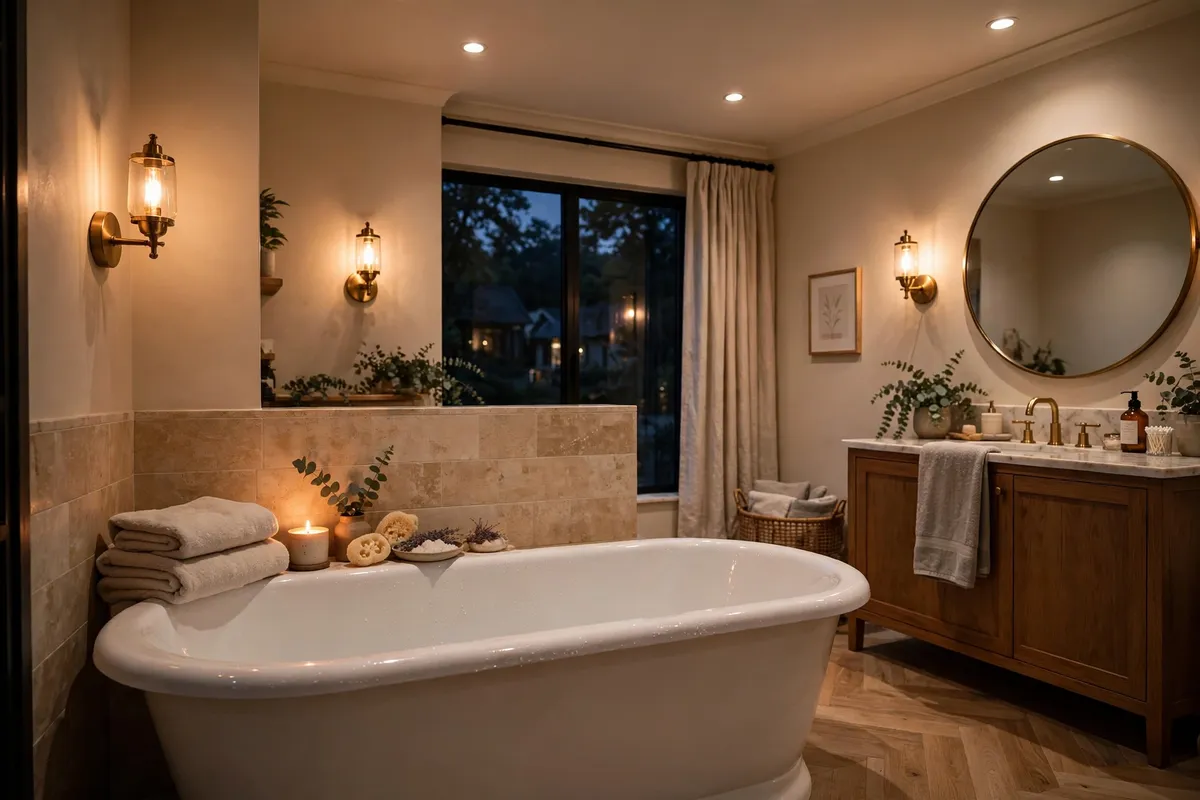
Harsh ceiling light ruins a bath, so plan lighting in layers. Warm wall sconces at mirror height flatter skin and create a glow, while a dimmer on the main ceiling light lets you drop the room to candlelight levels in the evening. A small waterproof recessed light above the tub itself is worth adding during a remodel, as is a backlit mirror that doubles as night lighting. Lighting is the cheapest luxury in a bathroom remodel, and around a bathtub it matters more than anywhere else.
12. Add Plants for a Living Spa Feel
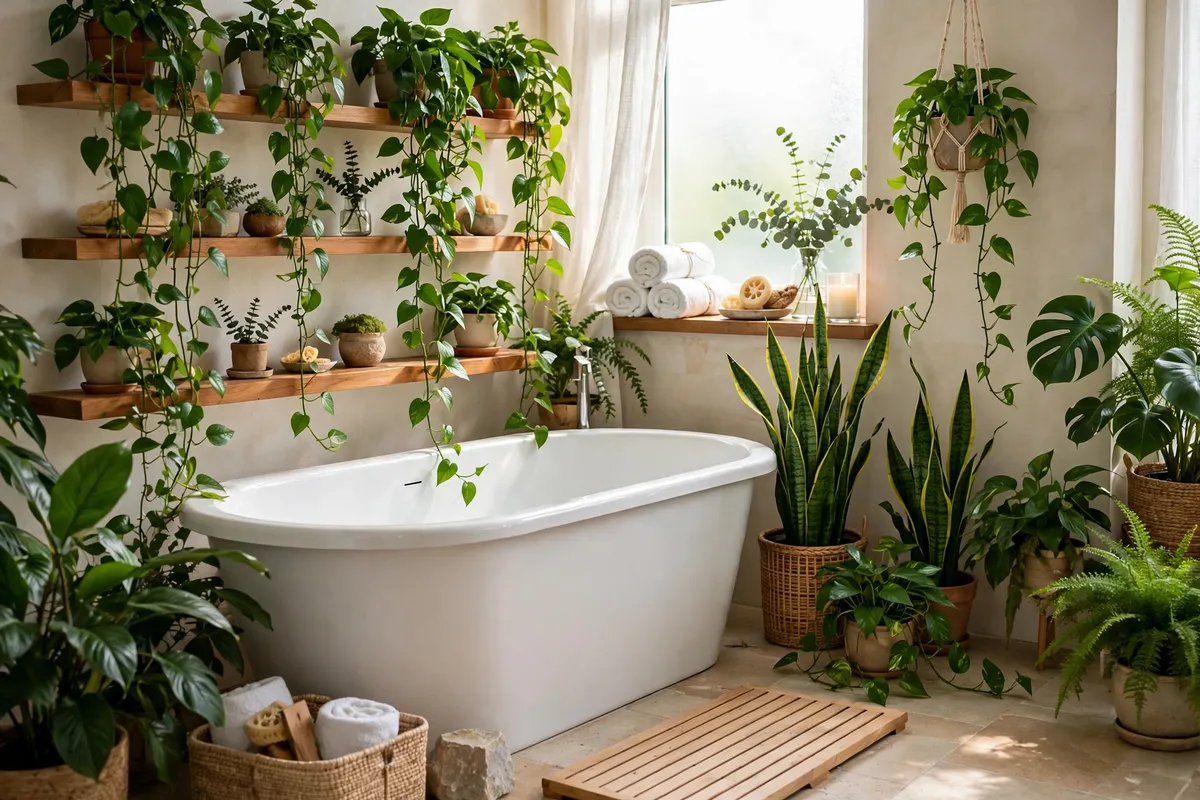
Bathrooms are naturally humid, which makes them ideal for plants — and a few well-placed greens turn a tub area into a living spa. Pothos trailing from a high shelf, a snake plant in a corner, and a small fern on the windowsill all thrive in bathroom conditions with minimal care. Choose pots that match your palette — terracotta, stone, or matte ceramic — and keep plants off the tub rim itself, where soap and water will damage leaves.
13. Style a Bath Tray Like a Ritual
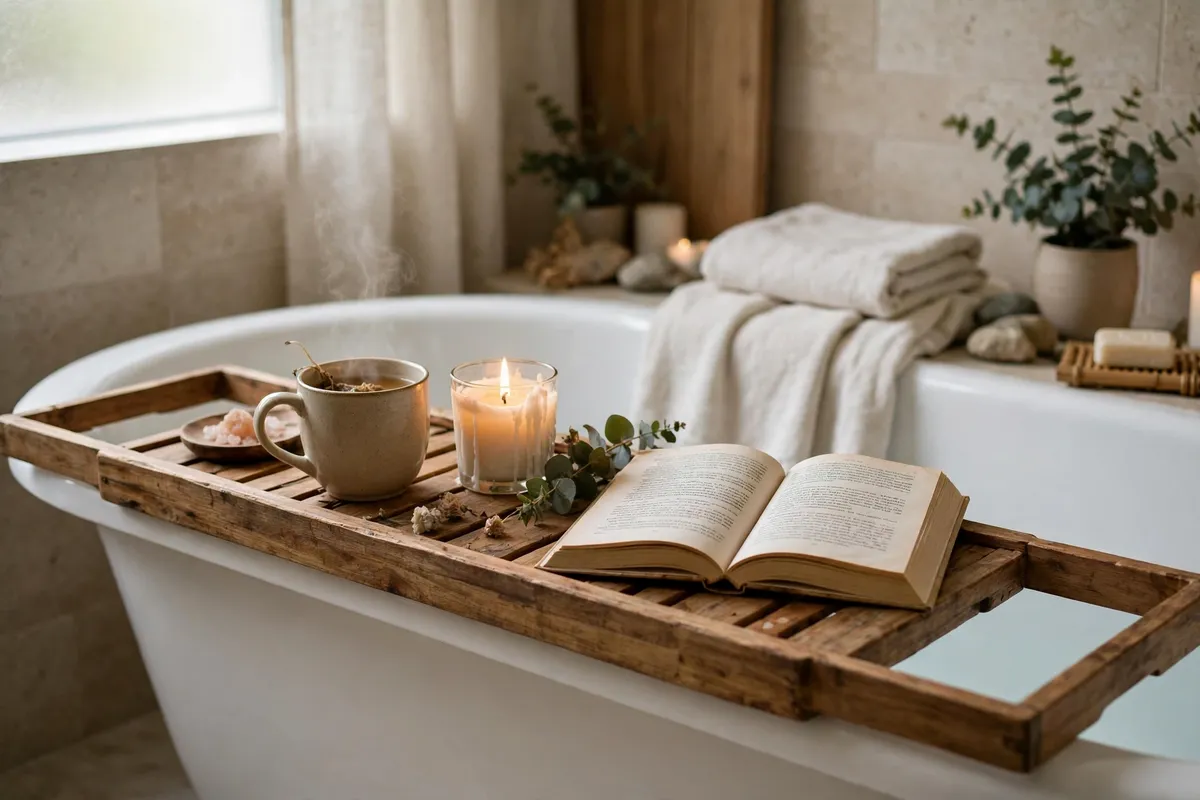
A bath tray is a small purchase with an outsized effect. A simple timber or bamboo tray across the tub holds a book, a candle, a cup of tea, and a phone — everything that turns a quick wash into an unhurried ritual. Choose a tray with adjustable arms so it fits your tub width, and keep the styling minimal: one book, one candle, one drink. Overloading the tray defeats the calm it is meant to create. It is the easiest finishing touch on this entire list.
14. Fit a Tub into a Small Bathroom
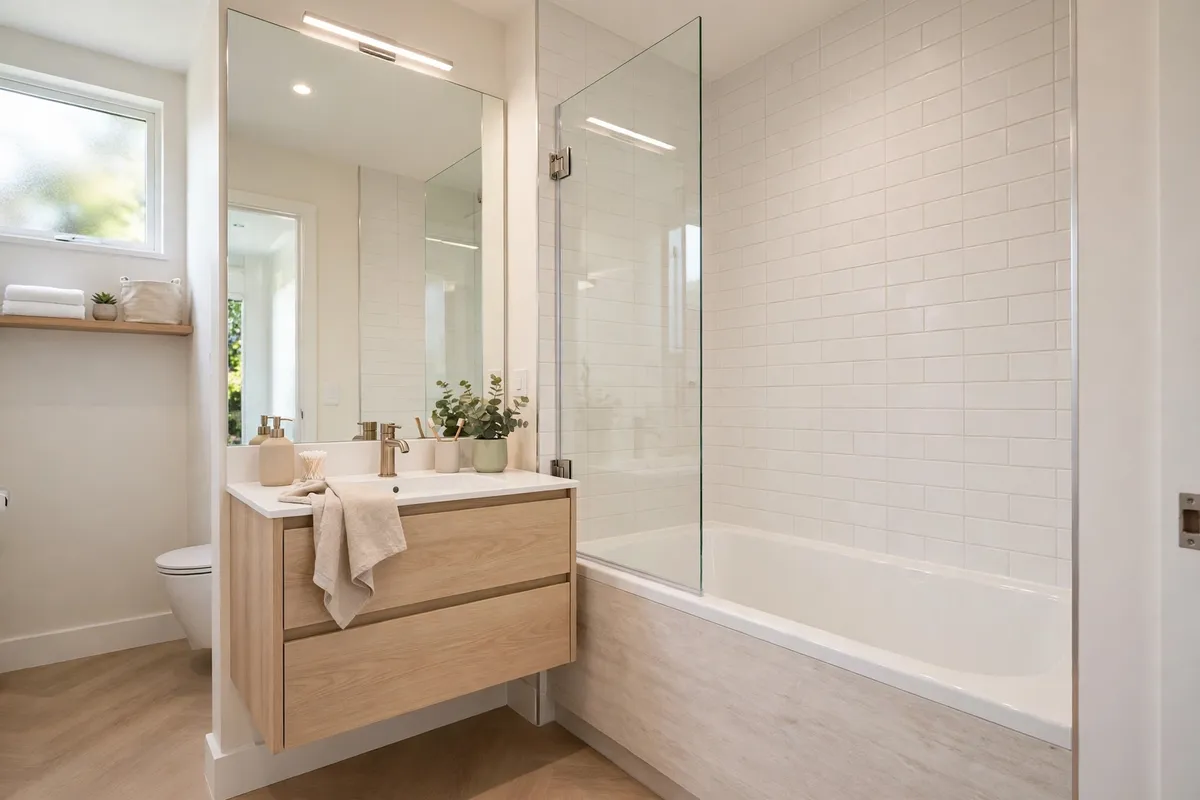
Small bathrooms can absolutely have tubs — the trick is choosing the right shape. A compact Japanese soaking tub, a short 140-centimeter tub, or a corner tub uses dead space that a standard tub wastes. Wall-hung toilets and vanities free up floor area, and a glass screen instead of a curtain keeps sightlines open so the room feels larger. Light colors, large mirrors, and vertical tile lines all stretch the space visually. Do not be talked into a shower-only layout if a soak matters to you — a well-fitted small tub beats a generous shower for relaxation every time.
15. Remodel on a Budget Without Looking Cheap
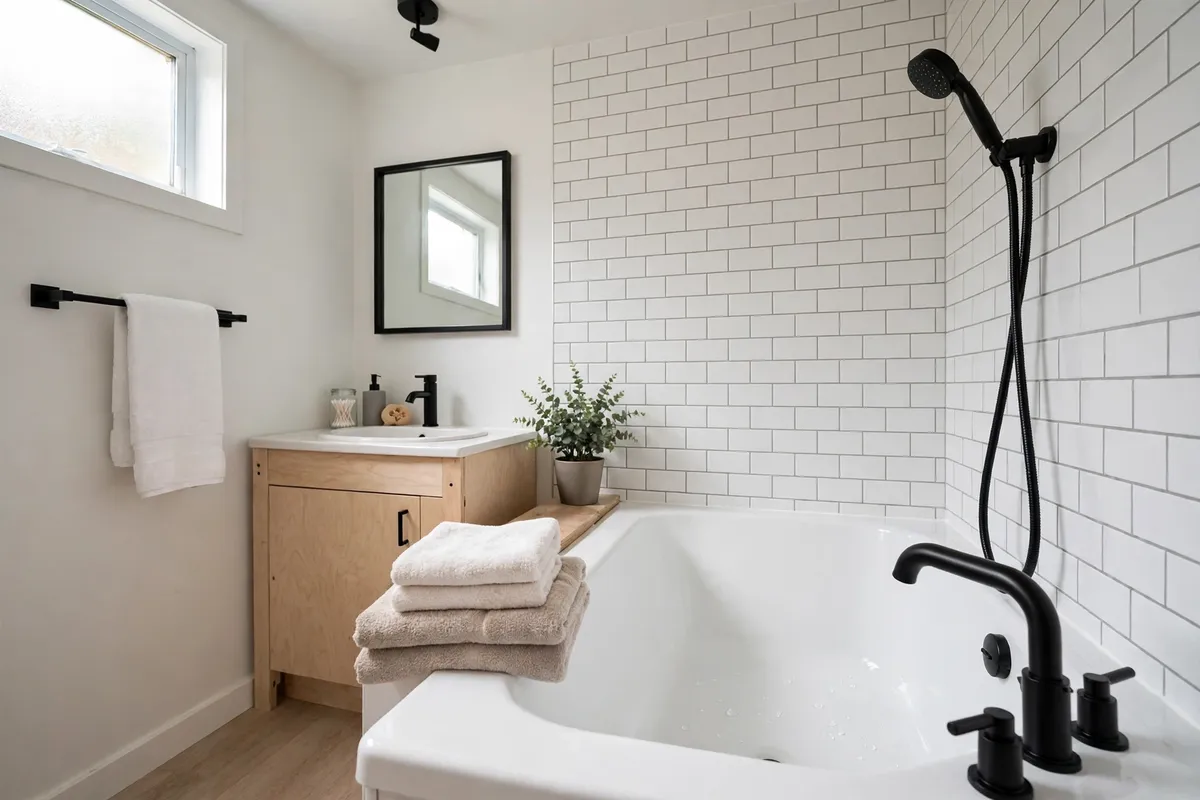
A bathtub remodel does not need a five-figure budget. Refinishing an existing tub in a fresh white or soft grey costs a fraction of replacement and looks new for years with proper care. Painting tile with a specialist tile paint, swapping old taps for modern matte black or brushed brass fixtures, and replacing a dated curtain with a glass screen or a quality linen-look curtain all refresh the room for very little money. Spend where it shows — fixtures and lighting — and save where it does not, like keeping the existing tub footprint so no plumbing moves.
Frequently Asked Questions
What is the best bathtub material for everyday use? Acrylic wins for most homes: it is light, warm to the touch, affordable, and easy to repair if scratched. Cast iron lasts longer and holds heat better but needs a strong floor.
How much space does a freestanding tub need? Allow at least 10 to 15 centimeters of clearance around the tub for cleaning and access, plus room for the filler tap. A bathroom around 2 by 2.5 meters can fit a compact freestanding tub.
Can I put a bathtub under a window? Yes, and it is one of the most popular remodel layouts. Use frosted or top-down window treatments for privacy, and make sure the window frame and sill are sealed against splashes.
Final Thoughts
The best bathtub idea is the one that fits your room, your budget, and the way you actually bathe. Start with the practical constraints — space, floor strength, and plumbing — then choose the style that makes you want to linger: a sculptural freestanding tub, a deep soaking tub, or simply a well-styled alcove with great light. Add one idea from this list at a time, and your bathroom remodel will feel like the spa retreat it was always meant to be.