11 Canvas Painting Ideas for Beginners
There’s something deeply satisfying about turning a blank canvas into art with your own hands — and you don’t need years of training to start. Canvas painting has exploded as a home hobby in 2026, and for good reason: it’s affordable, endlessly forgiving, and your finished pieces double as custom home decor you can’t buy in any store.
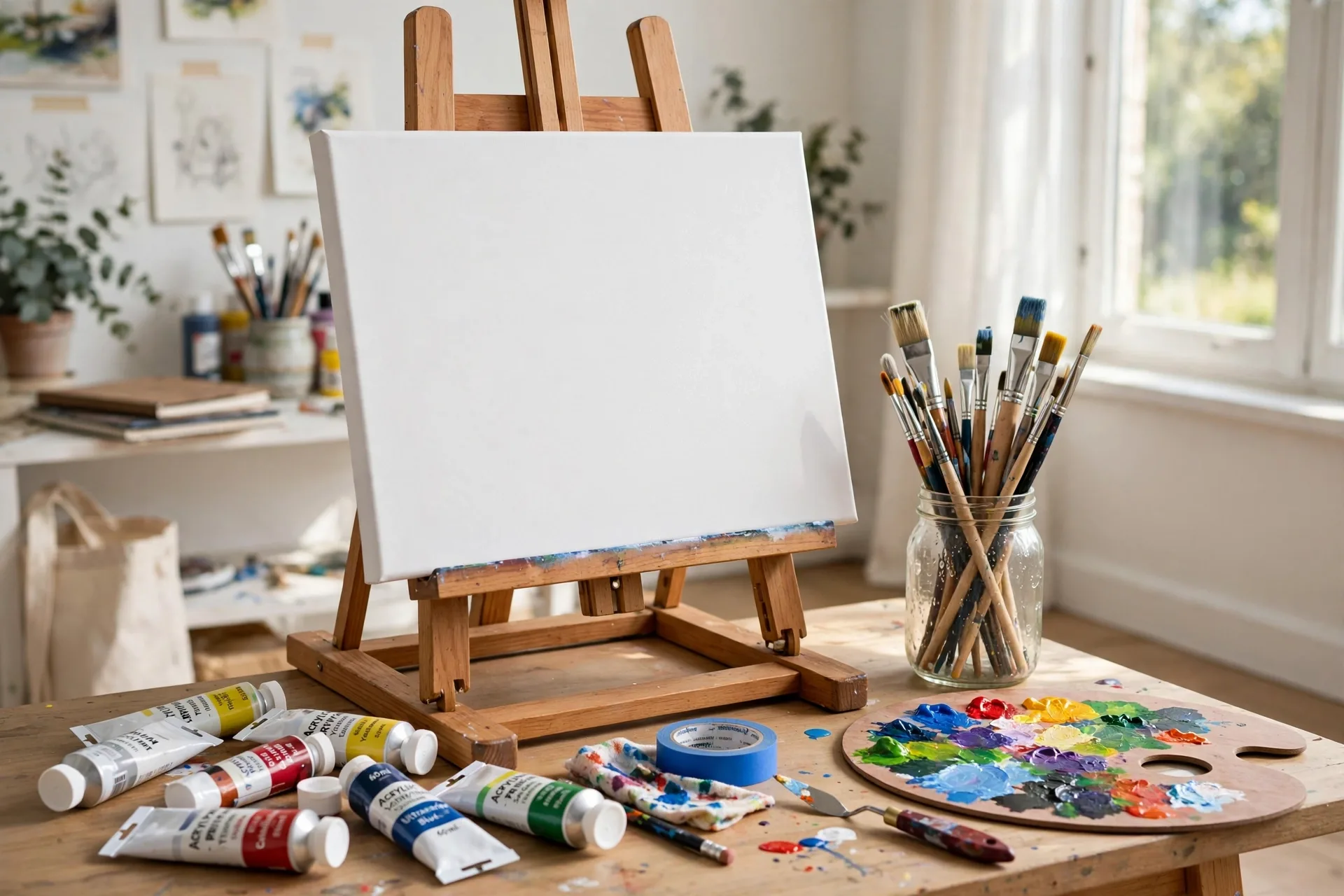
The secret beginners miss? Start with subjects that are simple by design. The 11 ideas below were chosen because they look impressive finished but rely on basic shapes, limited palettes, and techniques anyone can learn in an afternoon. Pick the one that speaks to you and let’s paint.
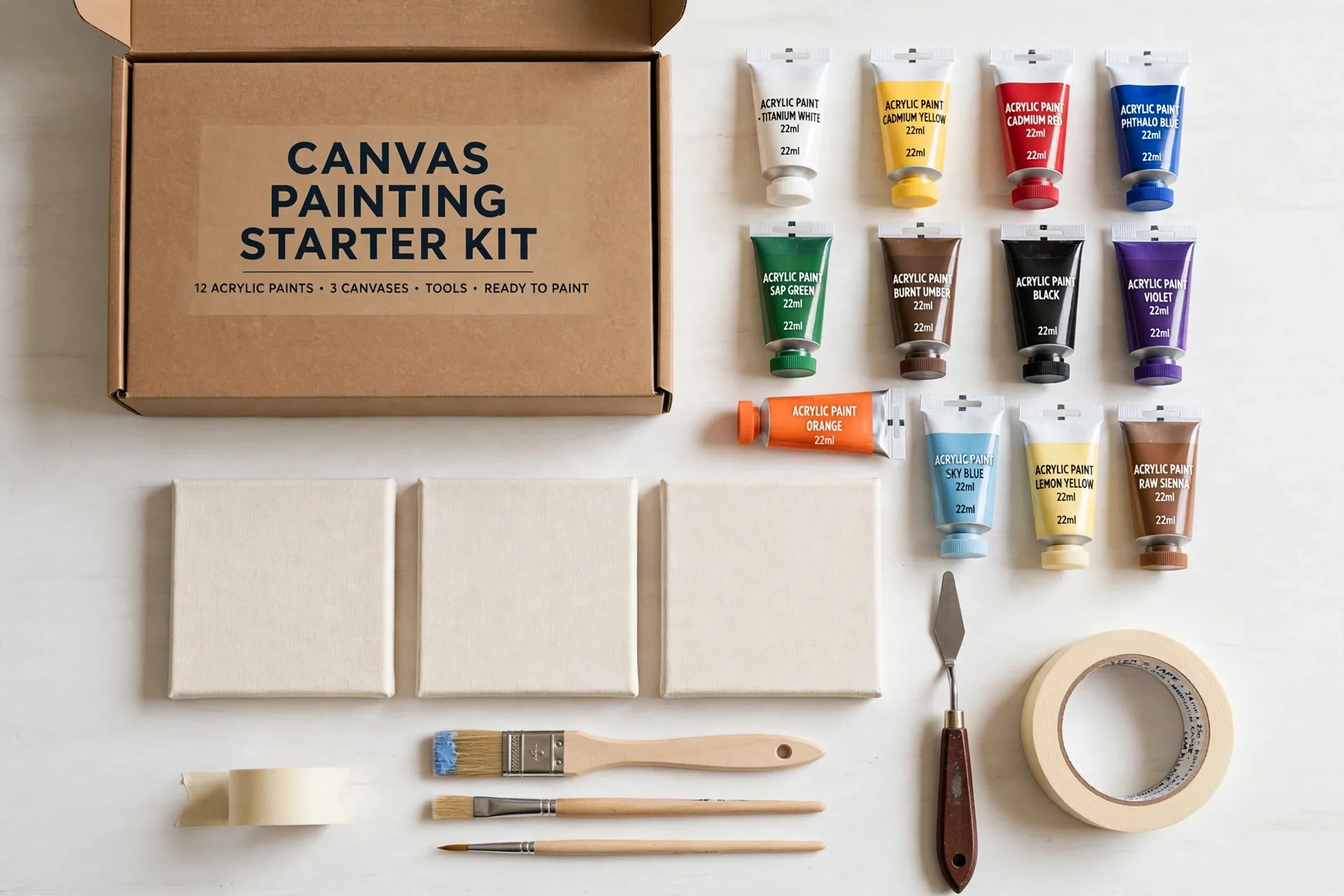
What You’ll Need to Start
You don’t need a professional studio. A starter kit is refreshingly simple: a few stretched canvases (start with 8×10 inches), a basic set of acrylic paints, three brushes (one flat, one round, one small detail brush), a palette or old plate for mixing, a cup of water, and paper towels. Acrylics are the beginner’s best friend — they dry fast, clean up with water, and let you paint over mistakes like they never happened. Total startup cost is usually less than a single dinner out.
A few extras worth grabbing once you’re hooked: painter’s tape for crisp edges, a palette knife for texture work, and a spray bottle to keep acrylics workable a little longer on the palette. None of these are required on day one, but each one unlocks new techniques when you’re ready. Buy student-grade supplies at first — the difference between student and professional paint only matters once your skills catch up, and that takes months of happy practice. Choosing the right palette matters too — our room color schemes guide can help you pick colors that work in your home.
5 Beginner Mistakes to Avoid
Before you pick an idea, dodge these classic first-timer traps. One: using too much water — acrylics should feel like soft butter, not soup; over-thinned paint looks washed out and won’t cover. Two: painting details first — always block in big background shapes before touching small elements. Three: muddying colors by over-mixing — mix a color, test it, and stop; endless stirring turns everything brown-gray. Four: working on a huge canvas too soon — large surfaces magnify every wobble, so master small formats first. Five: comparing your day one to someone’s year ten — social media shows finished highlights, not the hundred practice canvases behind them.
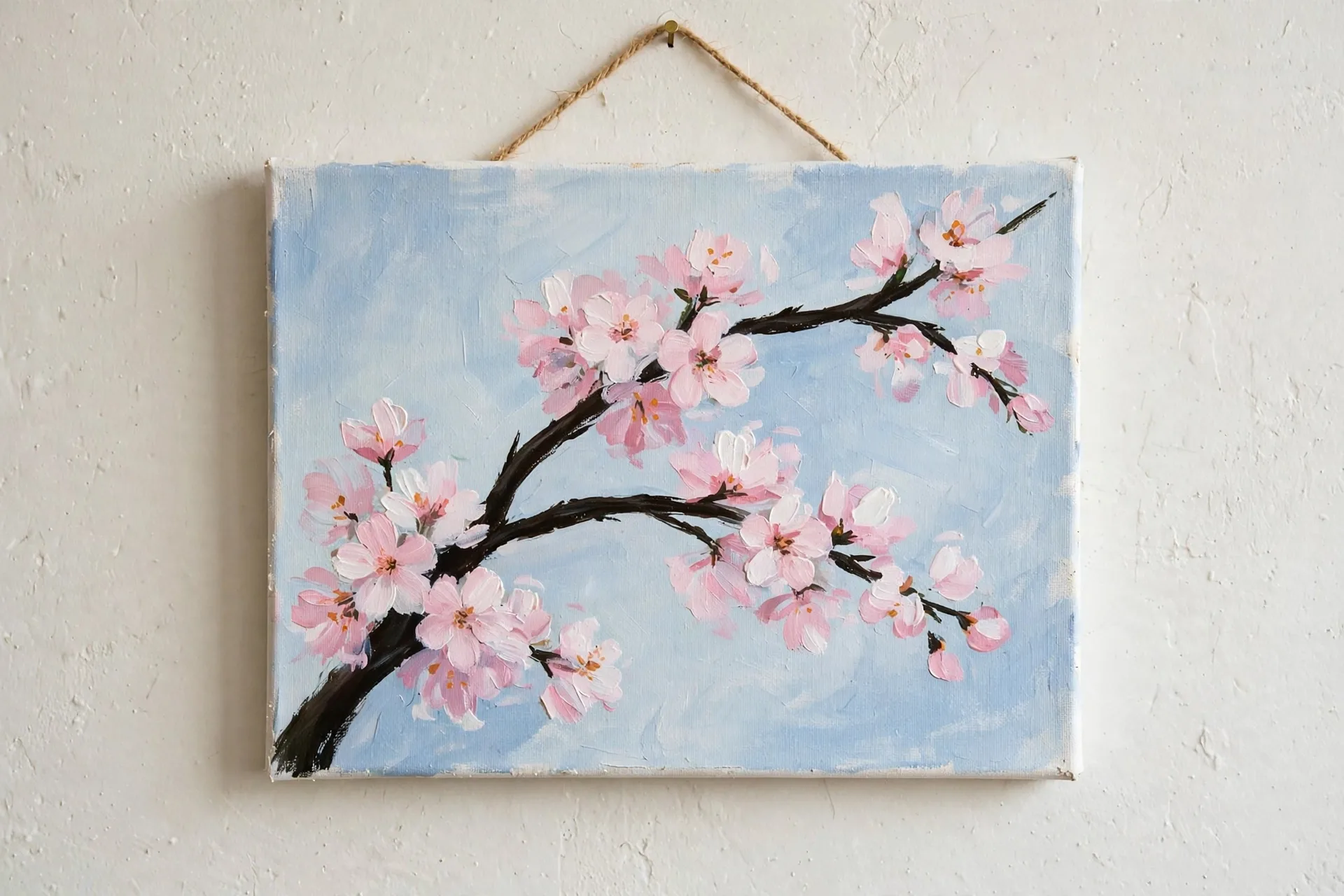
1. Cherry Blossom Branch
Few subjects are as forgiving — and as beautiful — as cherry blossoms. Paint a dark, slightly curved branch diagonally across the canvas, then dab clusters of soft pink and white blossoms along it using the tip of a round brush. The blossoms don’t need precision; their charm is in their looseness. Try this: add a few falling petals drifting below the branch for movement, and keep your background a pale wash of blue or cream so the pink pops.
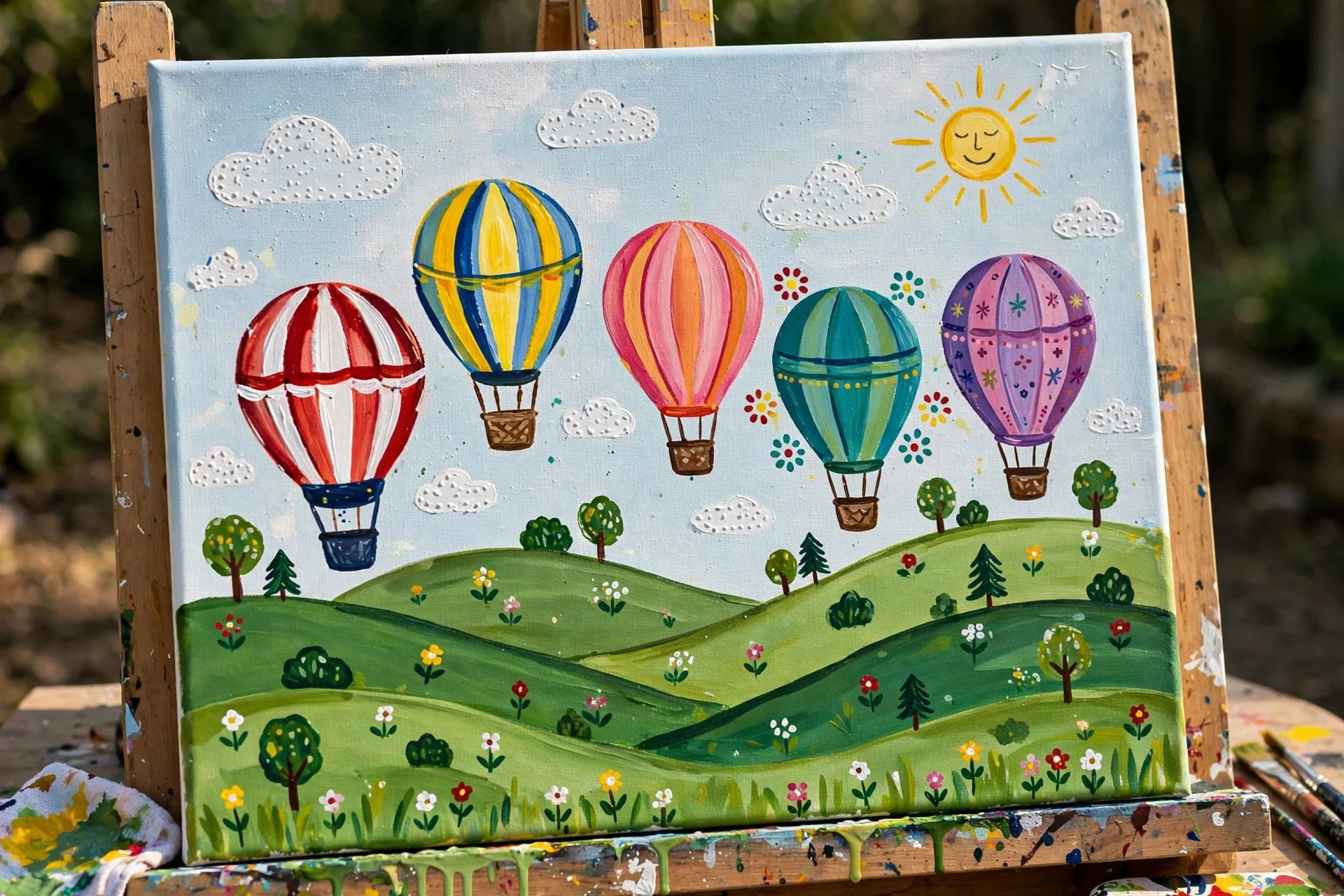
2. Hot Air Balloons Over Rolling Hills
This cheerful scene is built from the easiest shapes in art: circles and curves. Paint simple green hills along the bottom third, a soft sky above, then float three or four brightly striped balloons at different heights. Varying the balloon sizes creates instant depth. Try this: paint the balloon envelopes first as plain ovals, then add vertical stripes in contrasting colors once dry — the stripes are what make them read as balloons.
3. Moon Phases Row
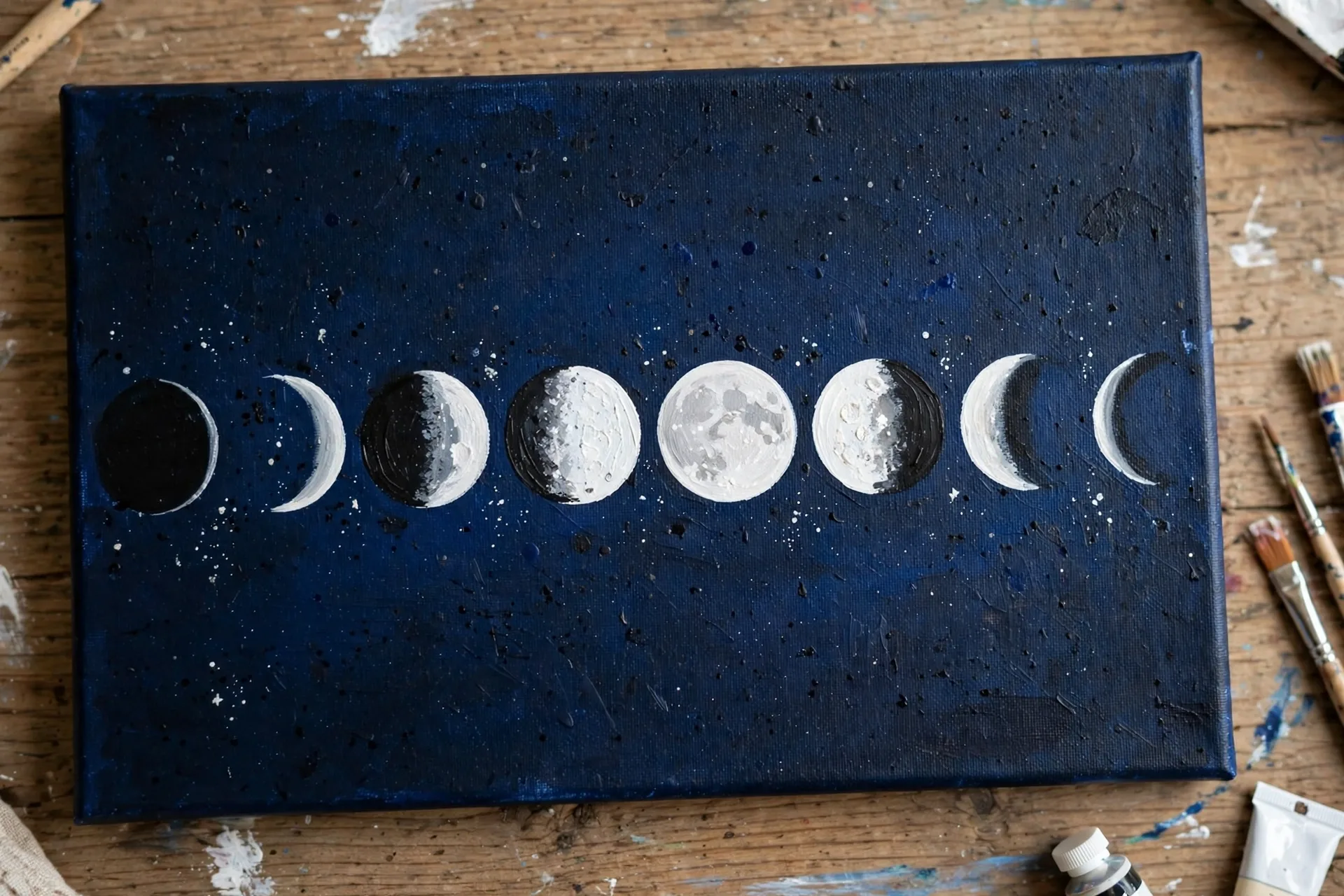
Elegant, modern, and almost meditative to paint. On a deep navy or black background, paint a horizontal row of eight circles showing the moon’s phases from new to full. Each phase is just a circle with a different amount of light and shadow. Try this: use a small round object like a bottle cap as a stencil for perfect circles, and add tiny stars around them with the tip of a dry brush for a finished gallery look.
4. Cactus Garden in Terracotta Pots
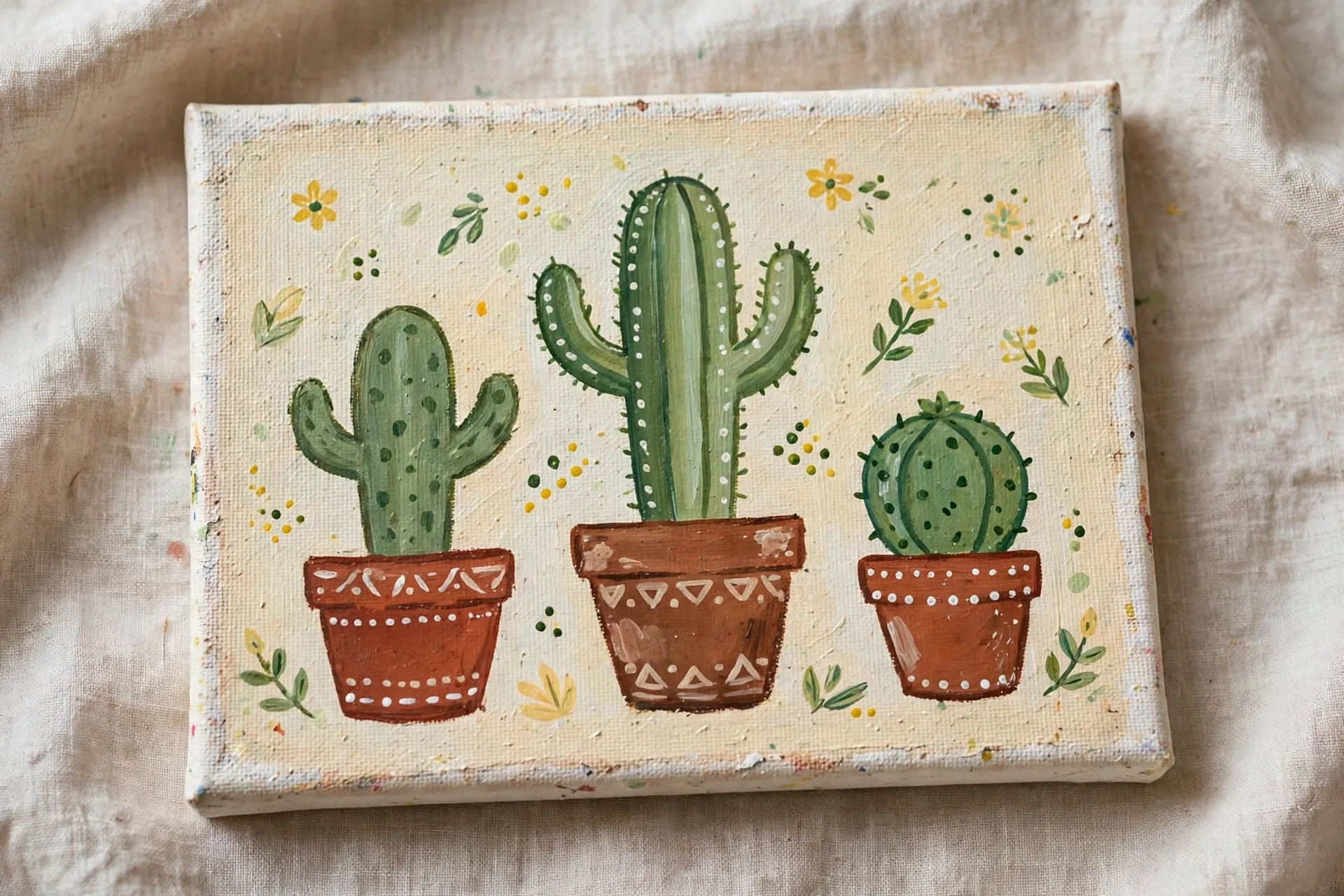
Succulents and cacti are the perfect beginner subject — they’re literally made of simple shapes. Paint two or three terracotta pots (tapered rectangles), then top each with a green oval or column for the cactus. Add tiny white dots or short strokes for spines. Try this: give each cactus a different silhouette — one tall column, one round barrel, one with arms — and the composition instantly looks intentional and charming.
5. Birch Trees With a Palette Knife
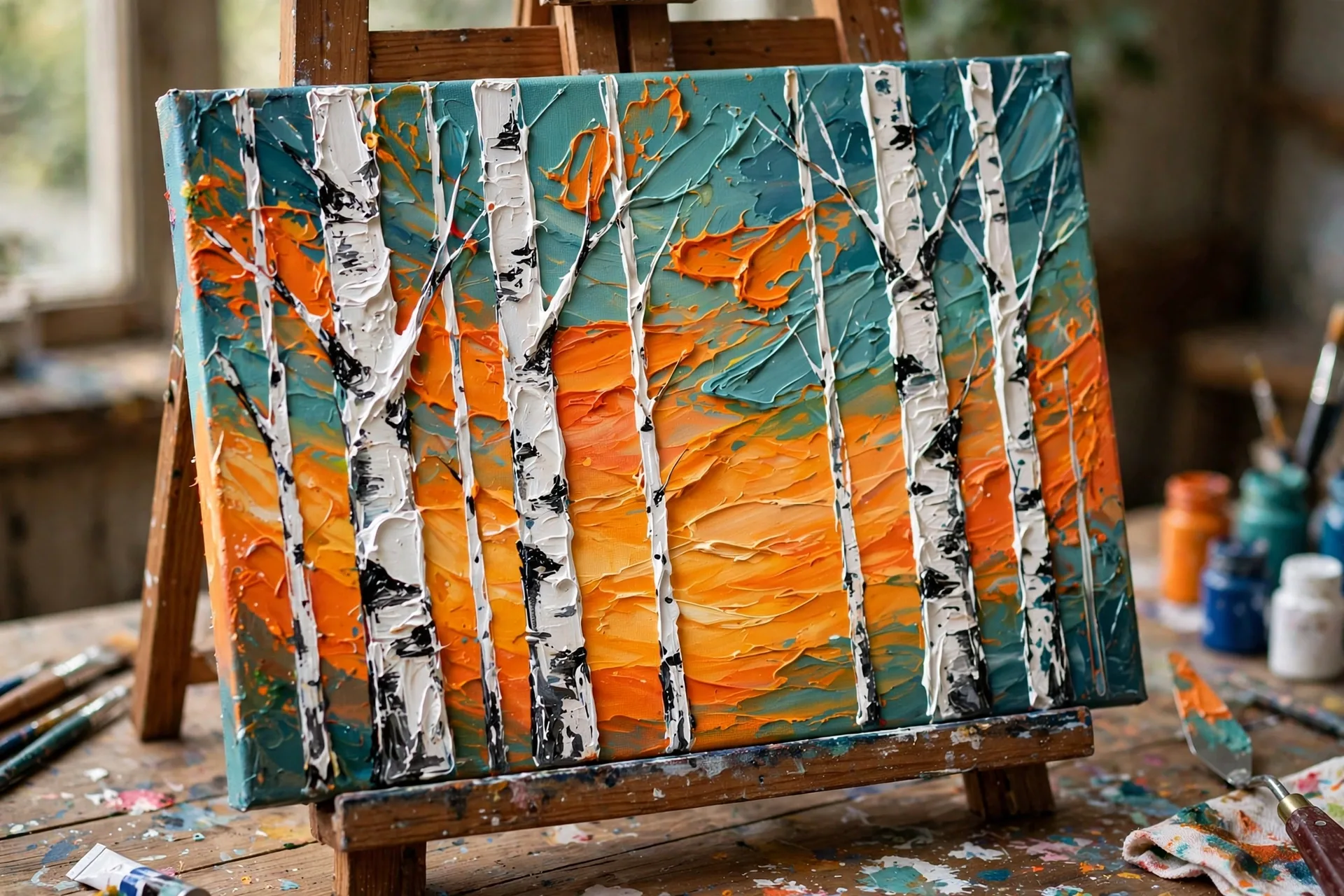
Here’s your excuse to try a palette knife, the most fun beginner tool. Paint a vibrant background first — sunset oranges, teals, or autumn reds — then drag white paint vertically with the knife edge to form birch trunks. The knife creates natural texture no brush can match. Try this: once the white trunks dry, add small horizontal black dashes for the birch bark markings. Five minutes of detail, huge payoff.
6. Single Continuous Line Face
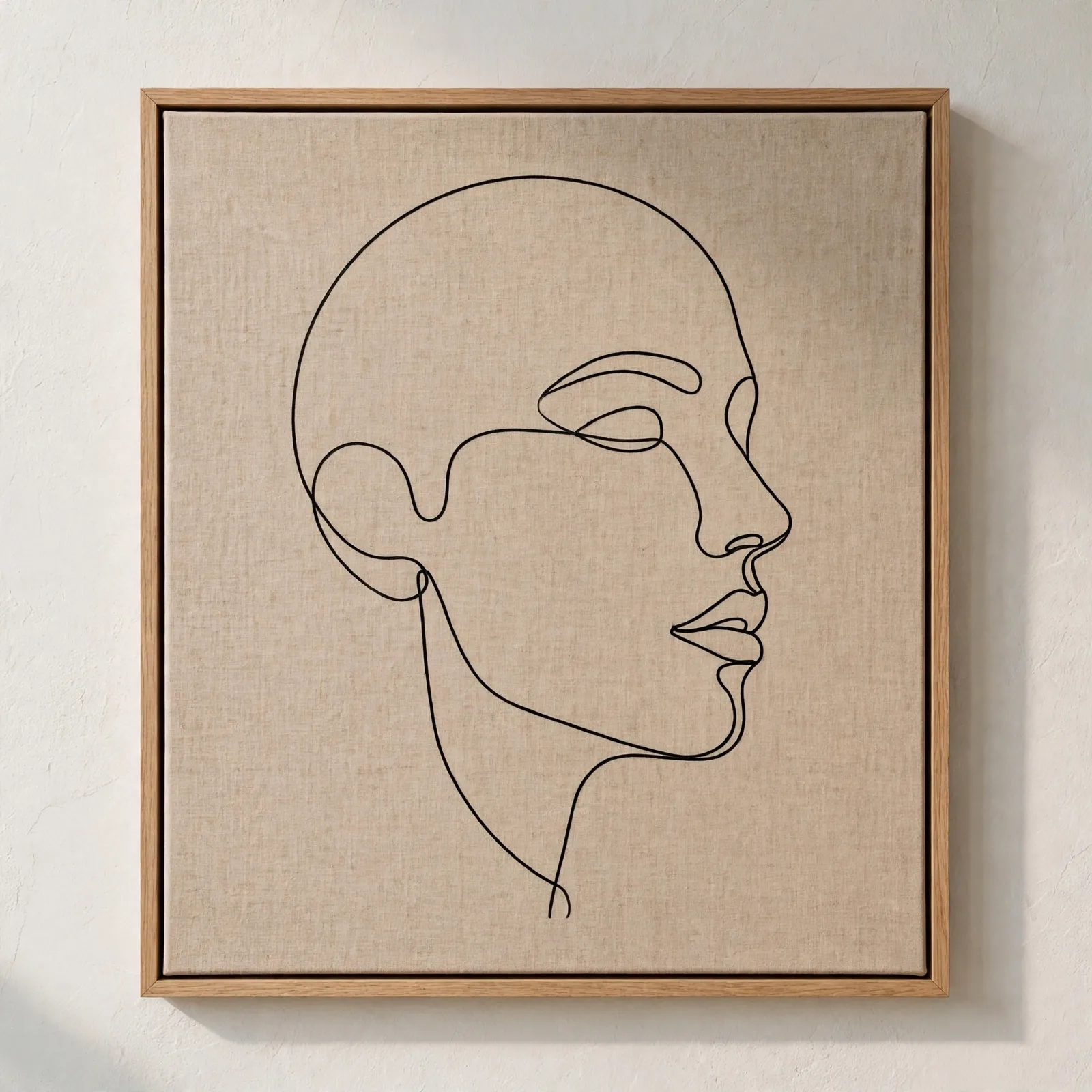
This trendy minimalist style looks sophisticated but couldn’t be simpler: draw a face using one unbroken line that never lifts from the canvas. Nose flows into lips, lips into chin, chin into neck. Wobbly lines are part of the charm. Try this: practice on paper three or four times first, then commit to canvas in black or deep brown over a warm beige background. Frame it simply — it looks like gallery art.
7. Painted Feathers
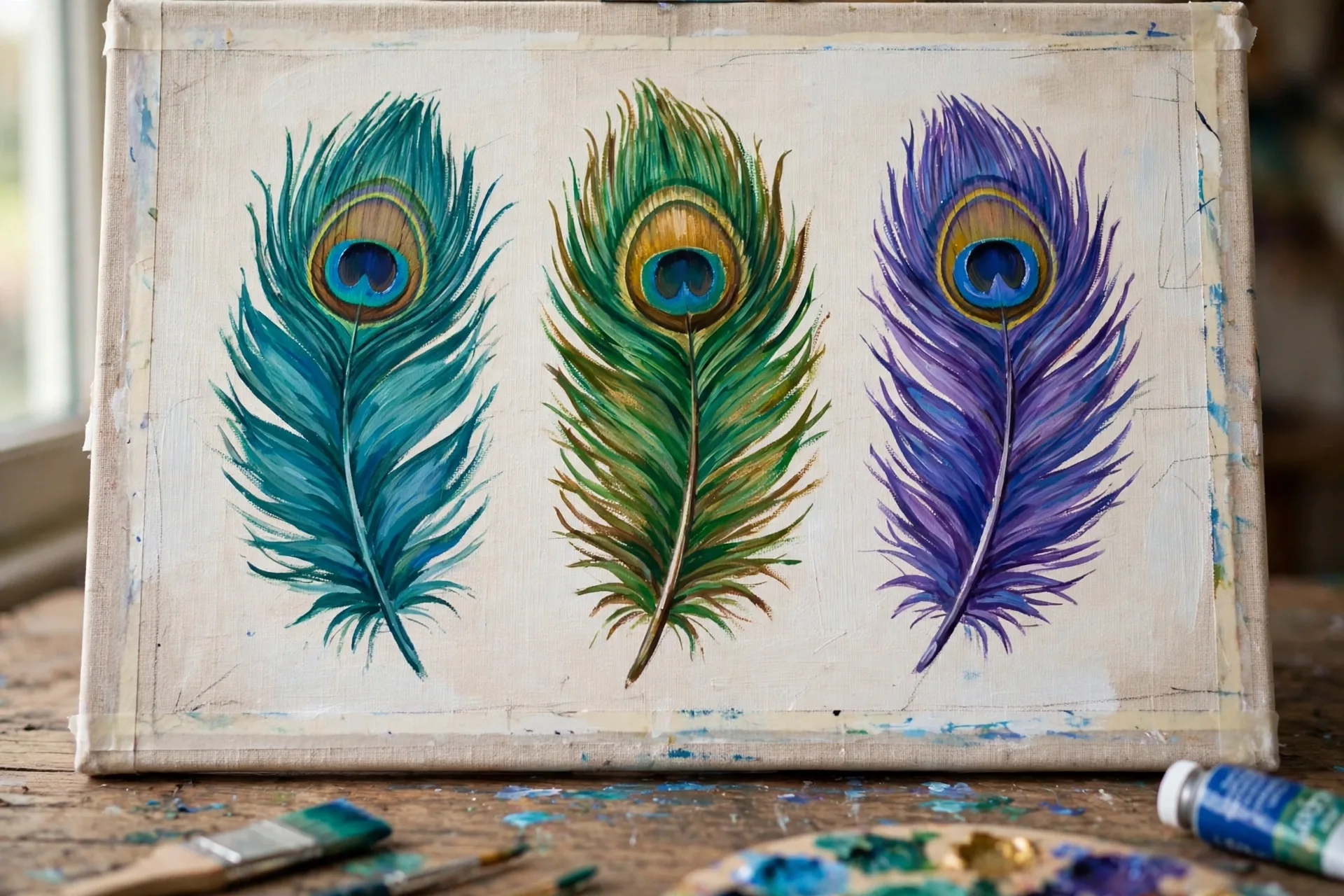
A single feather, painted large, makes a stunning study in color blending. Start with the central shaft as a thin line, then build the barbs outward with soft strokes, blending two or three colors along the length. Peacock feathers, with their eye pattern, are especially striking. Try this: paint three feathers in a row at slight angles, each in a different color story — the repetition turns a simple study into a designed piece.
8. Lighthouse at Dusk
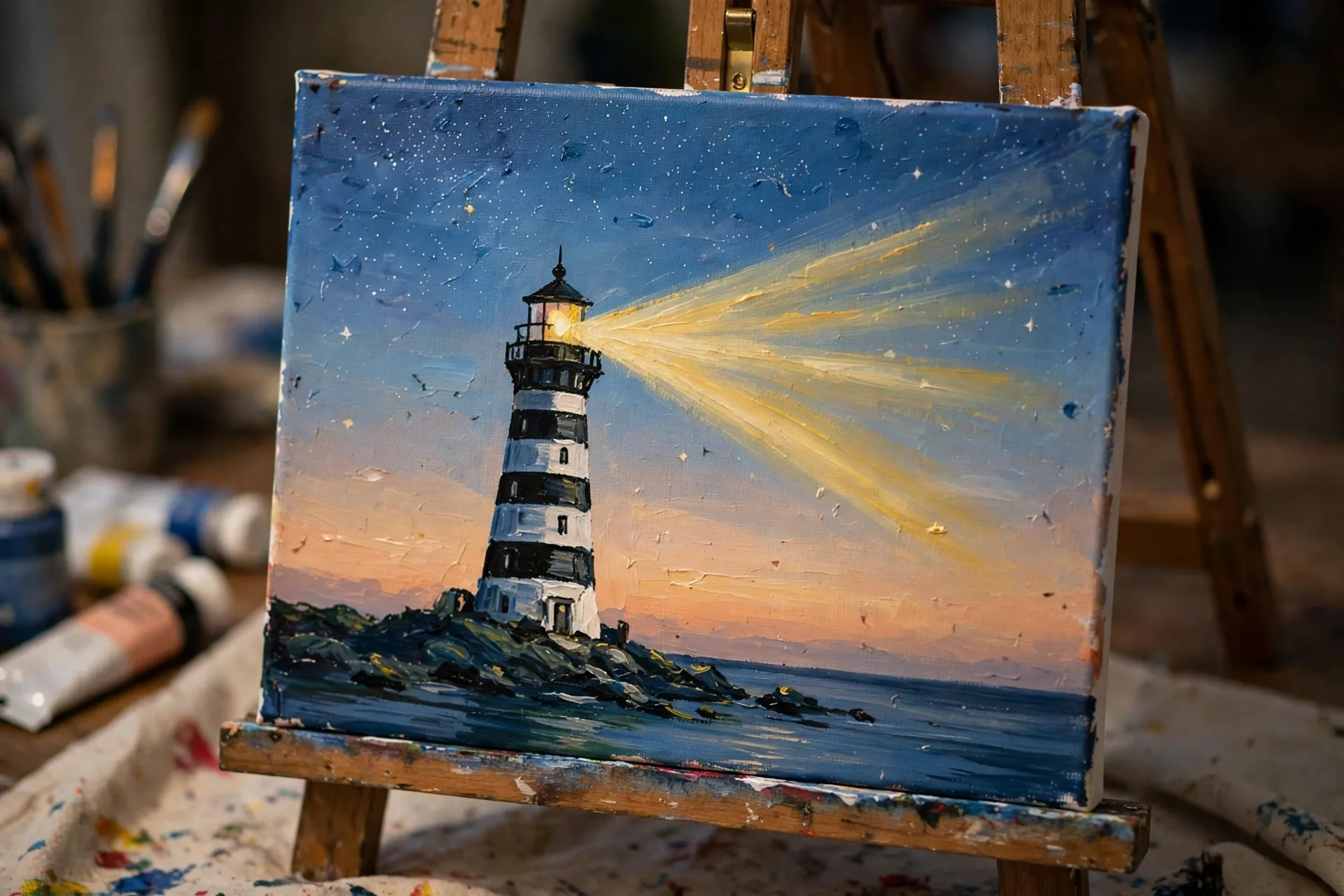
A lighthouse is essentially a striped tower — very paintable. Create a dusky gradient sky (deep blue melting into peach at the horizon), a dark strip of sea, then the lighthouse: a tapered tower with horizontal stripes and a small light room on top. Try this: add the light beam as a soft triangle of pale yellow extending from the lamp room, and dot a few stars into the upper sky. It’ll look like you planned it for weeks.
9. Polka Dot Pattern
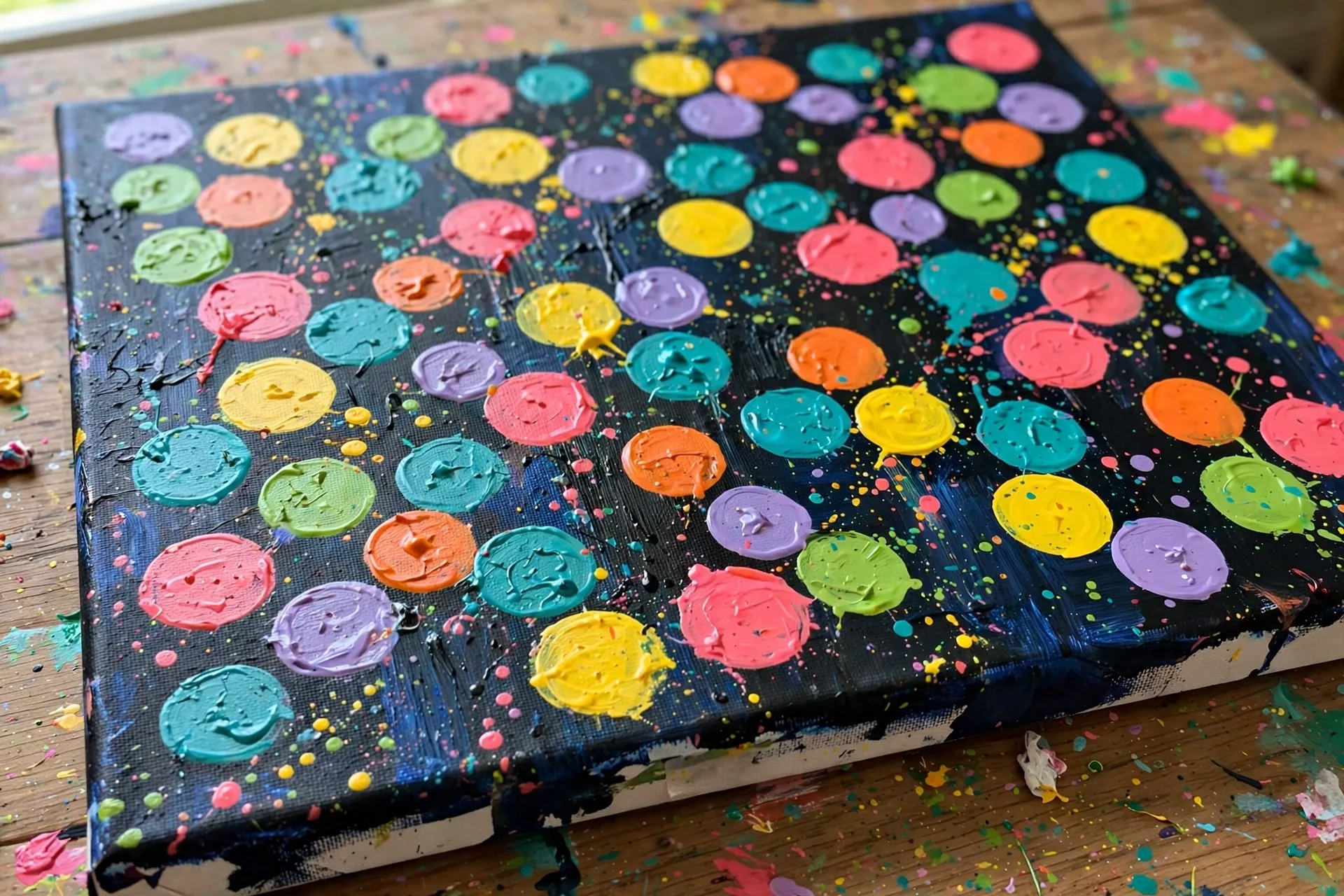
Don’t underestimate the power of dots. A canvas covered in hand-painted polka dots — in a coordinated palette of three or four colors — makes bold, joyful modern art. The trick is varying dot sizes while keeping the spacing relaxed and even. Try this: use the round end of a paintbrush handle or a pencil eraser as a dot stamp for perfect circles, and try a dark background with metallic gold dots for an upscale version.
10. Morning Coffee Still Life
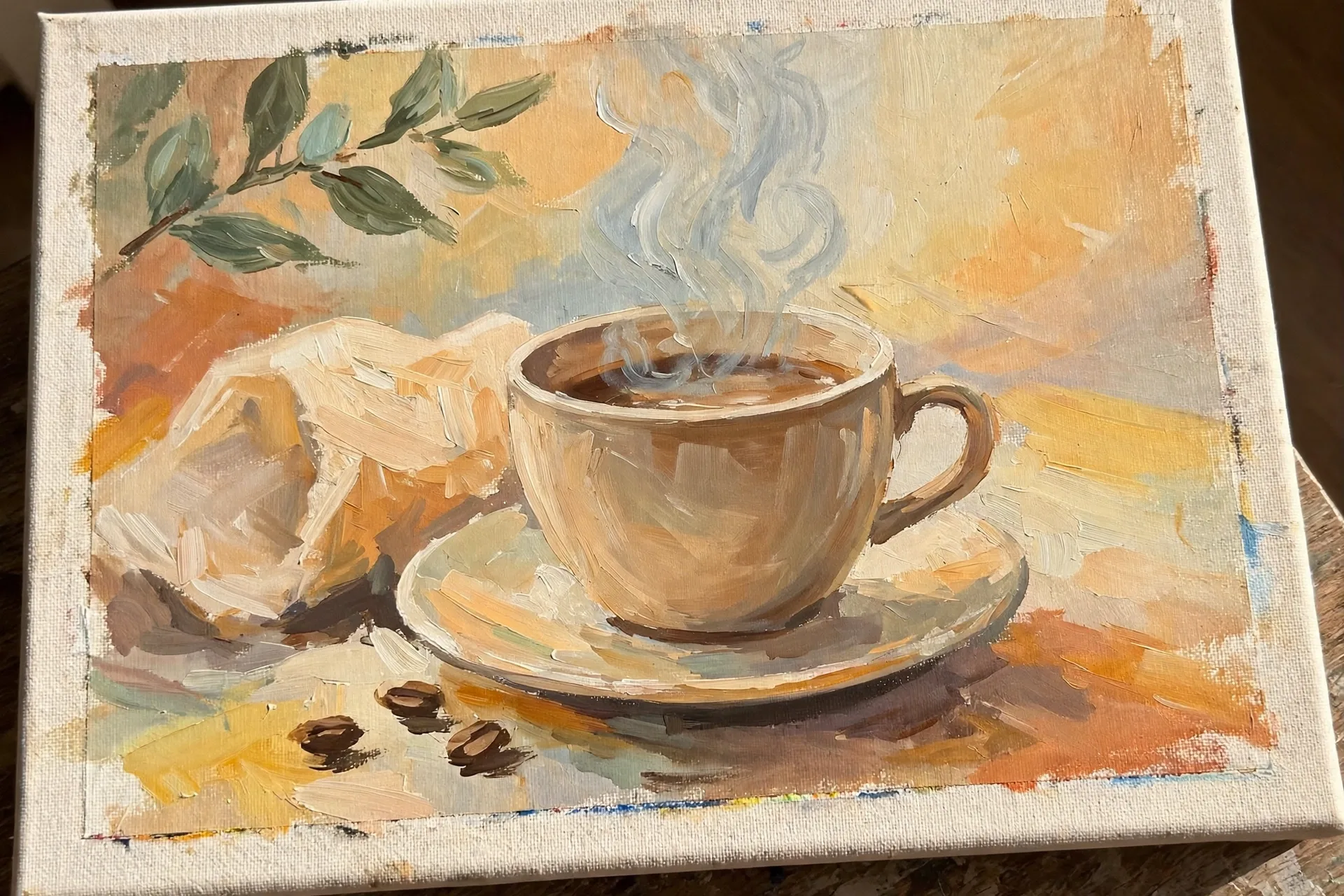
Your daily ritual, immortalized. Paint a simple table line, then a coffee cup: an oval for the rim, a curved body, a small handle loop, and a wisp of steam rising in a lazy S-curve. Add a saucer shadow beneath. It’s humble subject matter that teaches ellipses, shading, and composition. Try this: paint the cup in your favorite color and add a soft window-light highlight on one side — suddenly it’s not just a cup, it’s a mood.
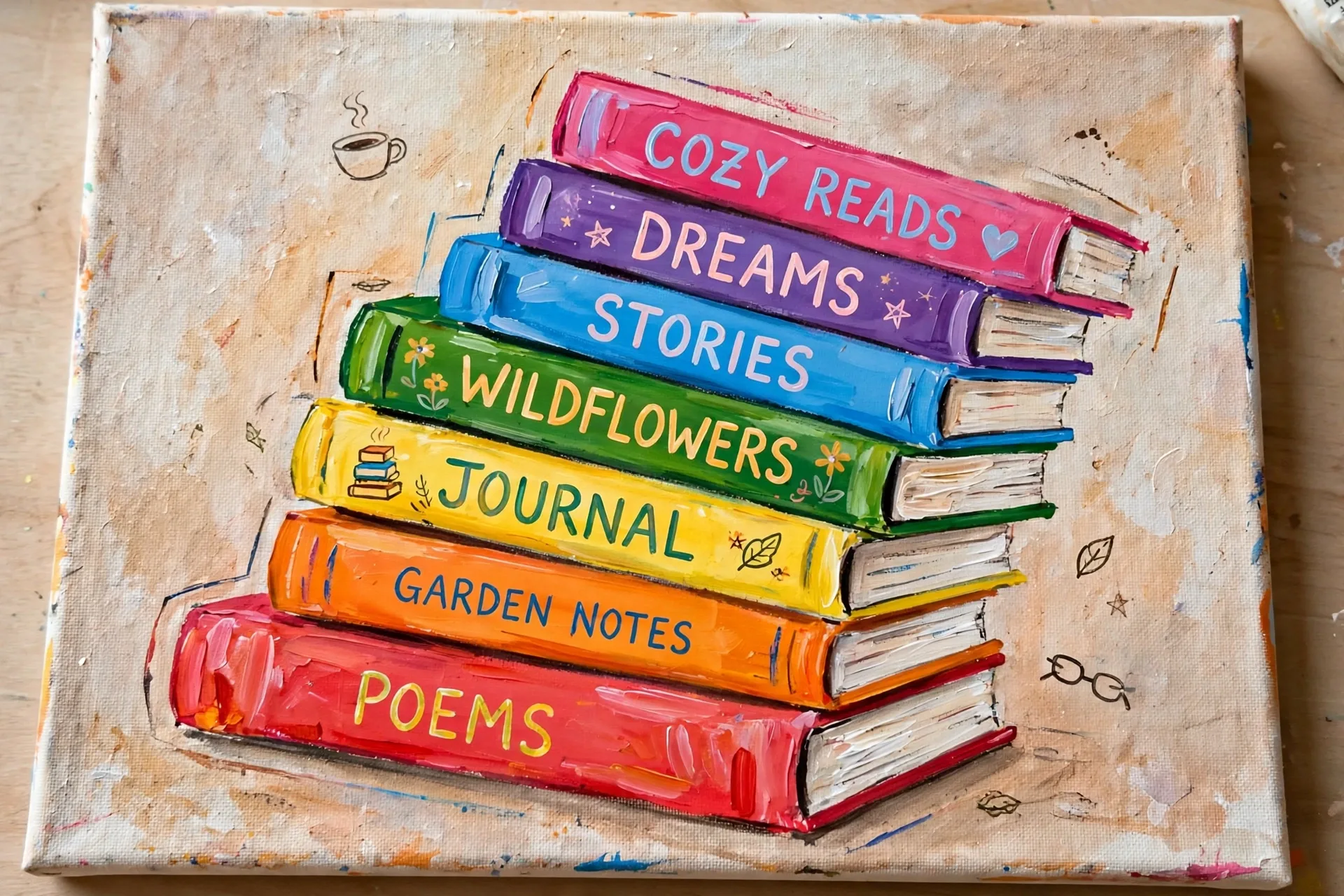
11. Stack of Colorful Books
Book lovers, this one’s for you. Paint a slightly uneven stack of book spines — each a simple rectangle in a different color, with a thin line or two suggesting titles. Tilt the stack slightly for casual charm. It’s pure rectangles, yet the result is warm and personal. Try this: paint the spines of books you actually own and love. Hang it near your reading nook and it becomes the most personal art in your home.
Styling Your Finished Canvases at Home
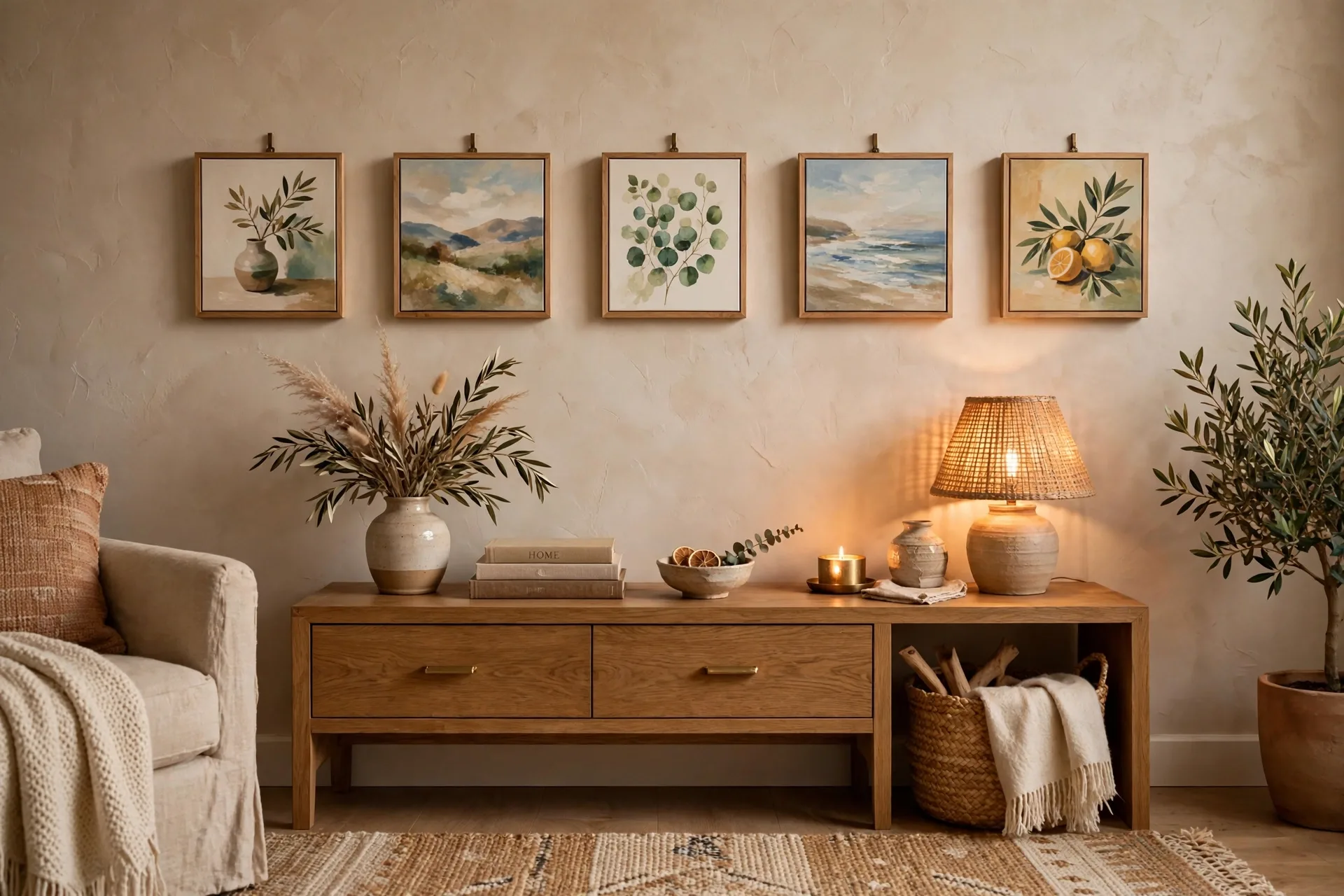
Here’s where painting meets home decor — and where beginners often stop too early. A finished canvas deserves proper display. Group two or three pieces in a gallery wall above a console or sofa, keeping the spacing consistent (about two inches apart). Lean larger canvases on shelves or mantels for a relaxed, collected feel. And don’t overlook lighting: a simple p
If you enjoy hands-on weekend crafts, our creative beaded bracelet ideas are another beginner-friendly project — twenty minutes, a handful of beads, and a bracelet you’ll reach for every day.
icture light or even good natural light transforms how your art reads in a room. For more ideas on making your walls work harder, our guide to modern ceiling decoration ideas has lighting tricks that make any room — and any artwork — look its best in 2026–2027. If your taste leans nostalgic, our vintage grandma bedroom decor ideas show how handmade art fits a warm, old-fashioned home.
Keep Your Momentum Going
The biggest beginner mistake isn’t bad technique — it’s stopping after one canvas. Set a tiny ritual: one small canvas a week, even just for thirty minutes. Keep a “play canvas” for experimenting with no pressure to finish. Photograph everything you make; looking back at your first pieces six months later is the best motivation there is. And remember — every artist you admire once painted their first wobbly circle too.
Your Turn to Paint
These 11 ideas prove you don’t need talent to start — you just need to start. Grab a canvas, pick the idea that made you smile, and give yourself permission to make something imperfect. In 2026, the most meaningful art in your home won’t be the print you bought — it’ll be the one you painted yourself.