11 Whimsical Children’s Bookshelf Designs for Kids
A bookshelf in a child’s room can be furniture, or it can be a destination. The difference is imagination: when the shelf itself is a tree, a castle, or a dollhouse, children walk toward the books on their own — and a child who chooses books is a child who reads. Whimsical bookshelf designs have become one of the most loved kids’ room trends precisely because they do double duty: storage that organizes the chaos and decor that sparks the very habit the books are for.
Here are 11 whimsical children’s bookshelf designs for kids, from budget wall shelves to heirloom statement pieces. Each one notes the age it suits best and what it teaches beyond storage — because the right shelf at the right height quietly builds independence, order, and a lifelong reading habit.
Before You Choose: Height, Safety, and Access
Three rules govern every good kids’ bookshelf, whimsical or not. Anchor it: any shelf taller than your child gets fixed to the wall — no exceptions, whatever the design. Keep books reachable: the everyday shelf should sit at your child’s chest height or lower, so choosing a book never needs an adult or a climb. Prefer front-facing display for under-fives: toddlers choose by covers, not spines, which is why so many designs below show books face-out. With those basics settled — and the color thinking from our room color schemes guide for the room around it — the fun can start.
1. The Tree Bookshelf
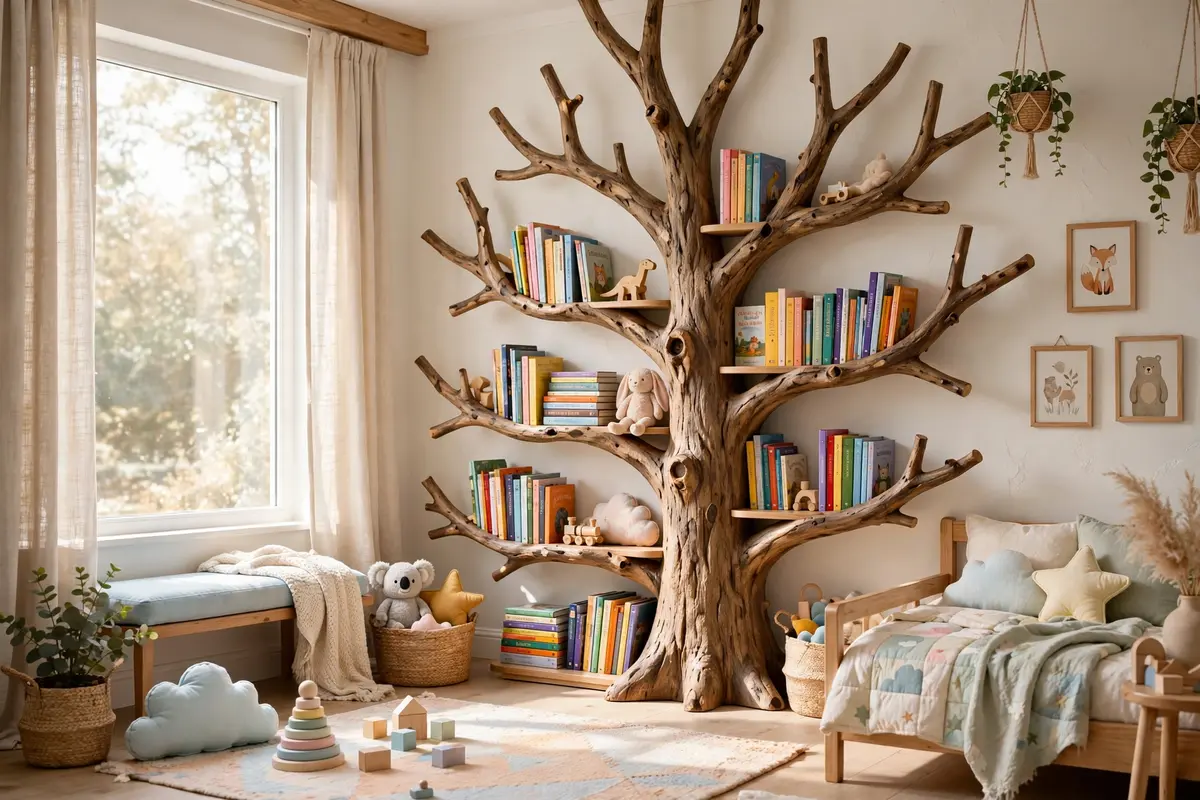
The most beloved whimsical design of all: a trunk rising from the floor, branches angling out as shelves. Books rest along the branches like fruit, and the whole piece reads as wall art even half-empty. Tree shelves suit ages 3 and up, hold a surprising number of picture books, and grow gracefully into chapter-book storage. Painted green it is a forest; in natural wood or white it turns Scandinavian and calm. Because stock leans at angles, choose a tree with small retaining lips on each branch so books do not slide off mid-story.
2. The Dollhouse Bookshelf
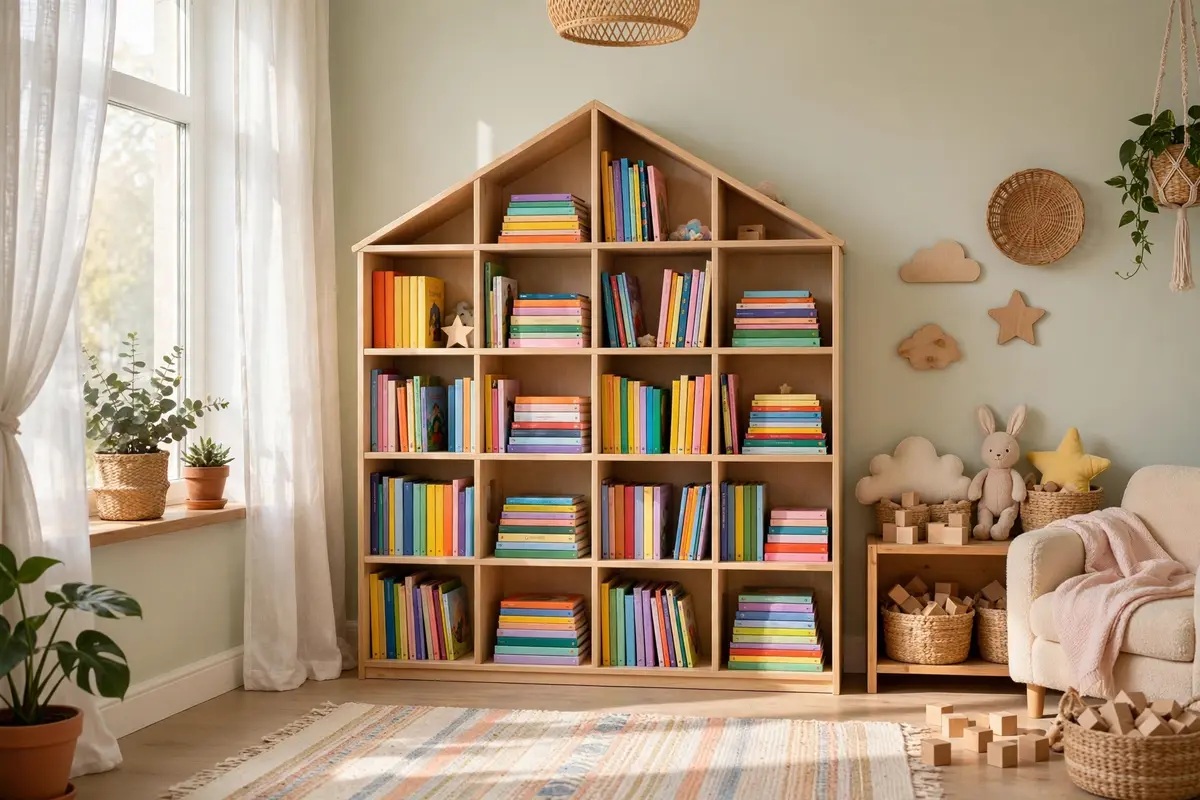
A bookshelf built like a dollhouse — pitched roof, window cutouts, little rooms instead of shelves — is two toys in one. The compartments are naturally sized for picture books on the lower floors and chapter books above, and children inevitably stage scenes with stuffed animals among the books. It suits ages 2–7 best. Look for a sturdy back panel (it doubles as the dollhouse’s wallpaper canvas) and let your child choose one room to keep purely for play — the mix of books and play is exactly what makes them return to it daily.
3. The Castle Bookshelf
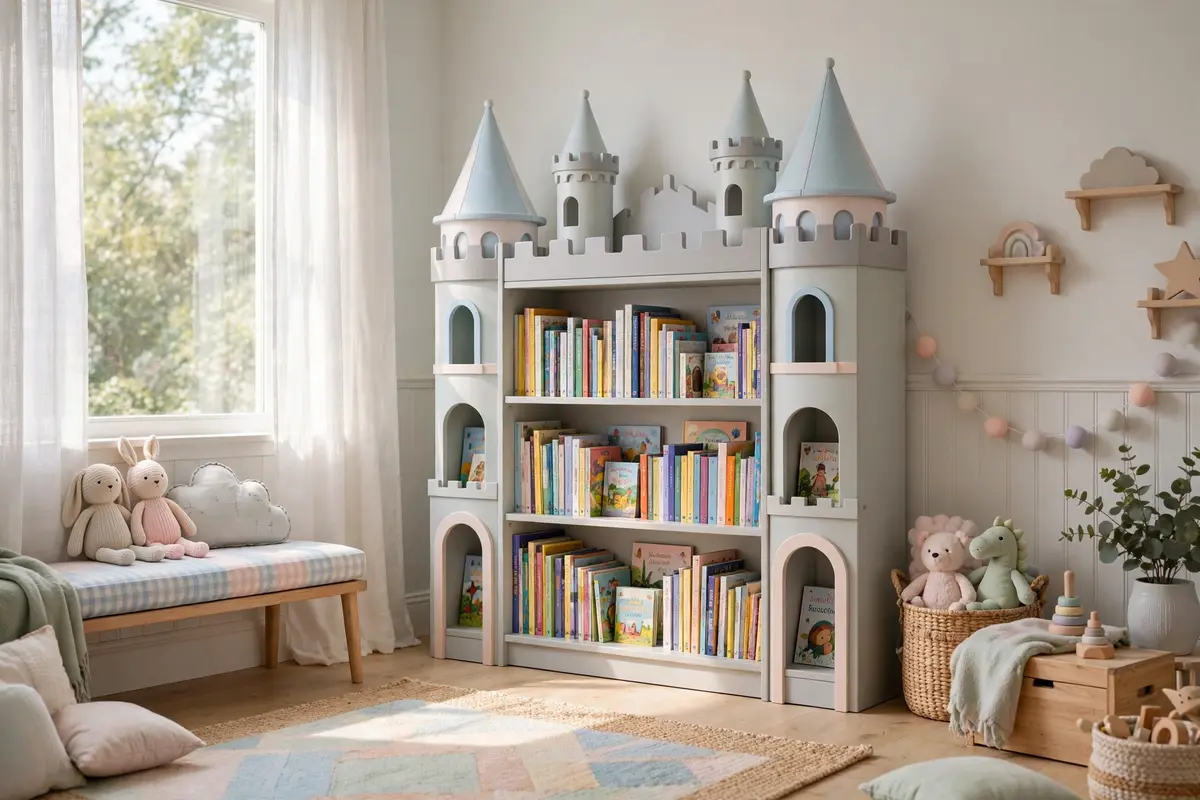
Turrets, battlements, and a drawbridge-colored door: the castle shelf turns story time into a kingdom ritual. The design usually offers two towers of shelving joined by a lower middle section — perfect for a reading cushion placed in front like a throne. Castle shelves are sturdier than they look when wall-anchored, and they suit ages 3–8. A grey stone finish leans knightly; pastel pink and white leans fairy-tale. If you are handy, this is one of the most satisfying DIY builds: the silhouette does all the decorative work, so plain painted MDF looks genuinely magical.
4. The Rainbow Bookshelf
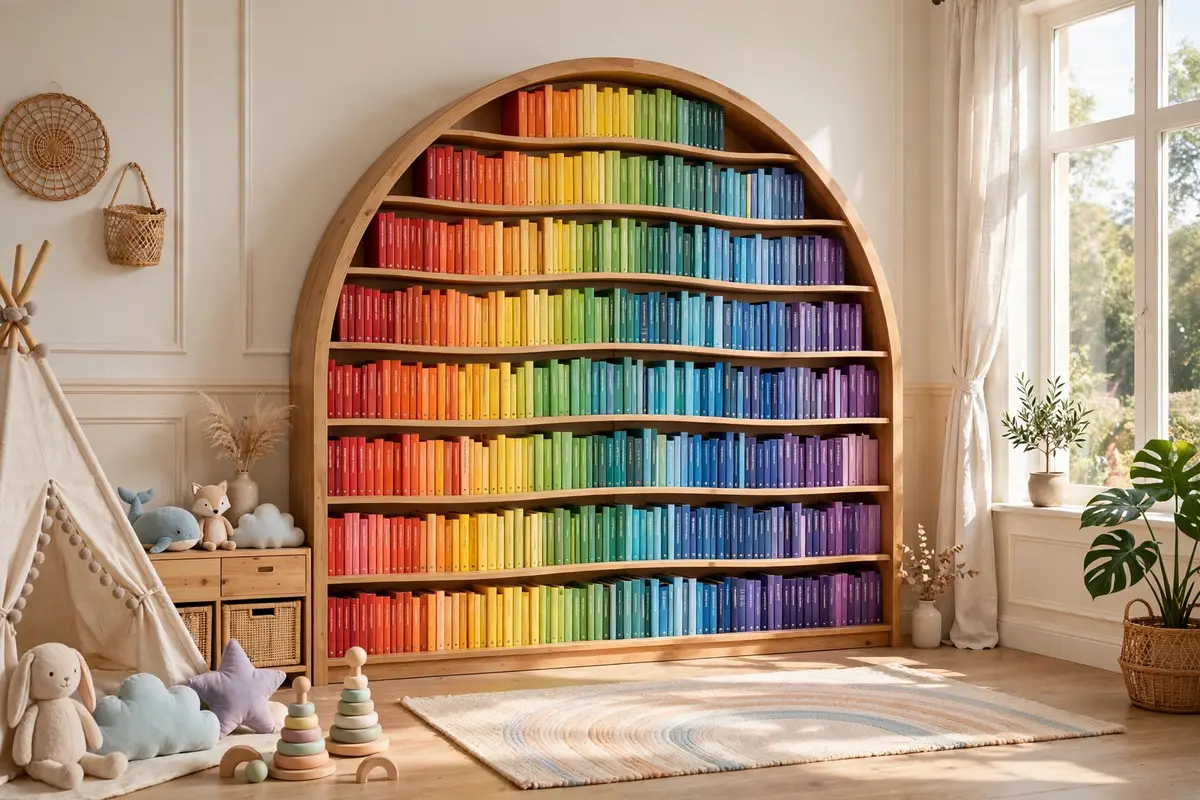
An arched rainbow frame — three or four concentric arcs in graduated colors — with shelves running across its base, plus one irresistible styling rule: the books themselves are sorted by cover color to complete the rainbow. Children adore maintaining the color order, which secretly teaches sorting and tidying every single day. Rainbow shelves work wall-mounted or as low bookcases for ages 2–6. In a neutral room the shelf is the color; in an already colorful room, choose a muted clay-and-mustard rainbow so it harmonizes instead of competing.
5. The Animal Bookshelf
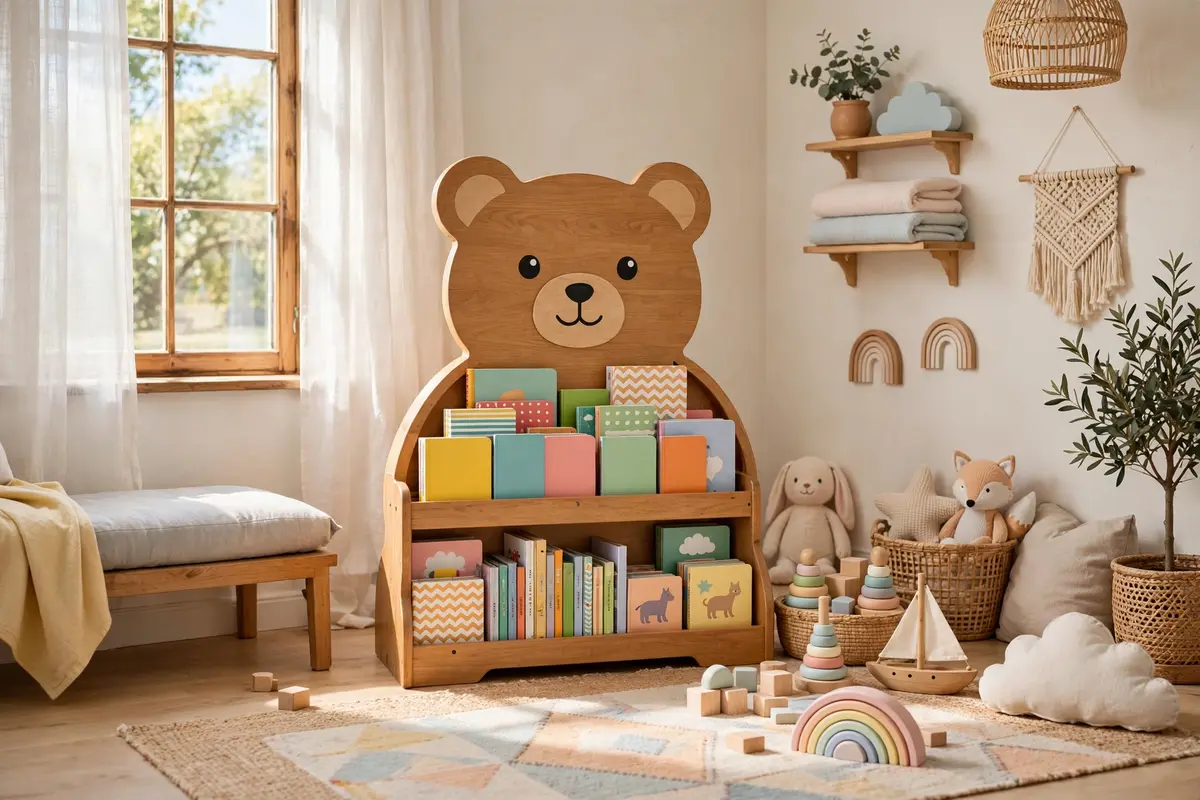
A bear, elephant, giraffe, or whale whose body forms the shelves. Animal bookshelves are often lower and wider than other designs, making them ideal first bookshelves for toddlers: every book sits at grab height, and the friendly silhouette makes the reading corner feel like a companion rather than furniture. The elephant’s back and the bear’s belly typically hold 20–40 toddler board books. Choose water-based, non-toxic paint finishes for this age group, and rounded ears and corners — the best designs sand every edge a small hand will meet.
6. The Teepee Bookshelf
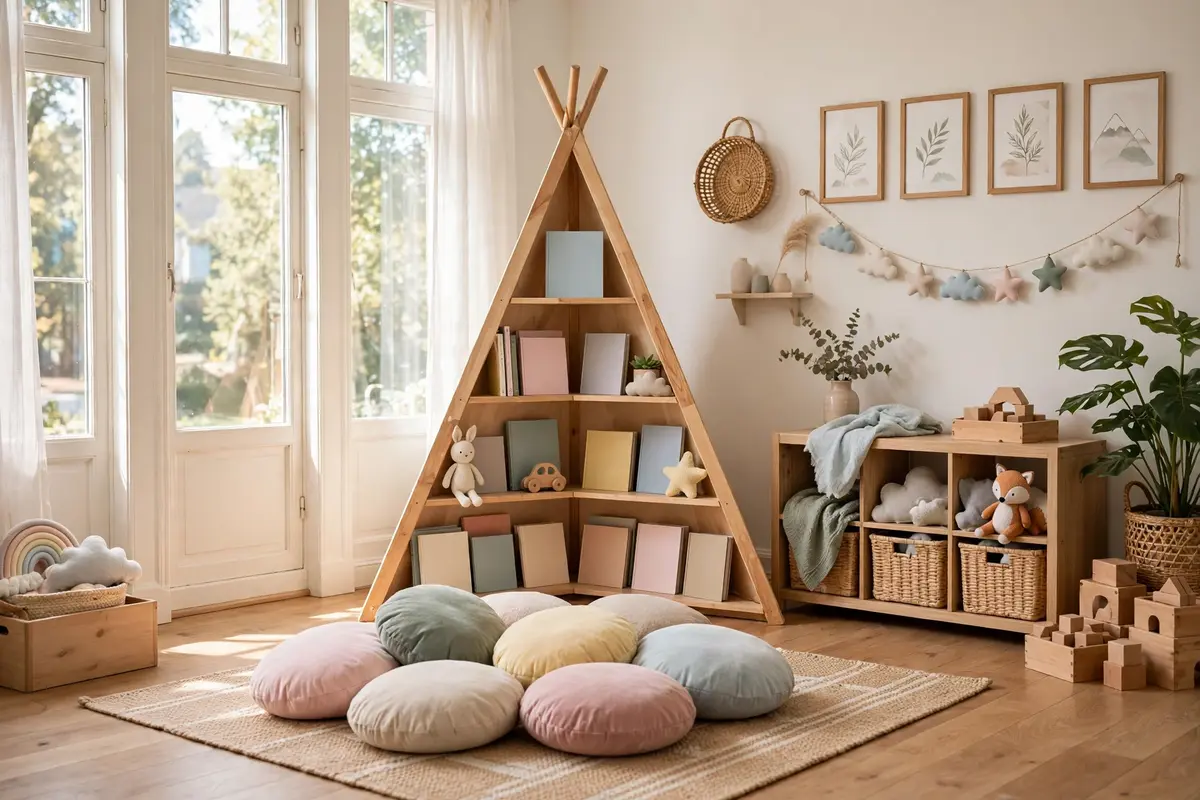
Four poles leaning together, shelves slung between them, a little fabric flag on top: the teepee shelf brings campfire energy to the reading corner. It pairs perfectly with floor cushions and a rug to build the hideaway feeling children crave — the same instinct behind the corners in our cozy reading nook ideas, scaled down to child size. Teepee shelves hold fewer books than a bookcase, which is a feature: rotate the stock weekly from a storage box and every rotation feels like new books arriving. Best for ages 3–7.
7. The Rotating Bookshelf Tower
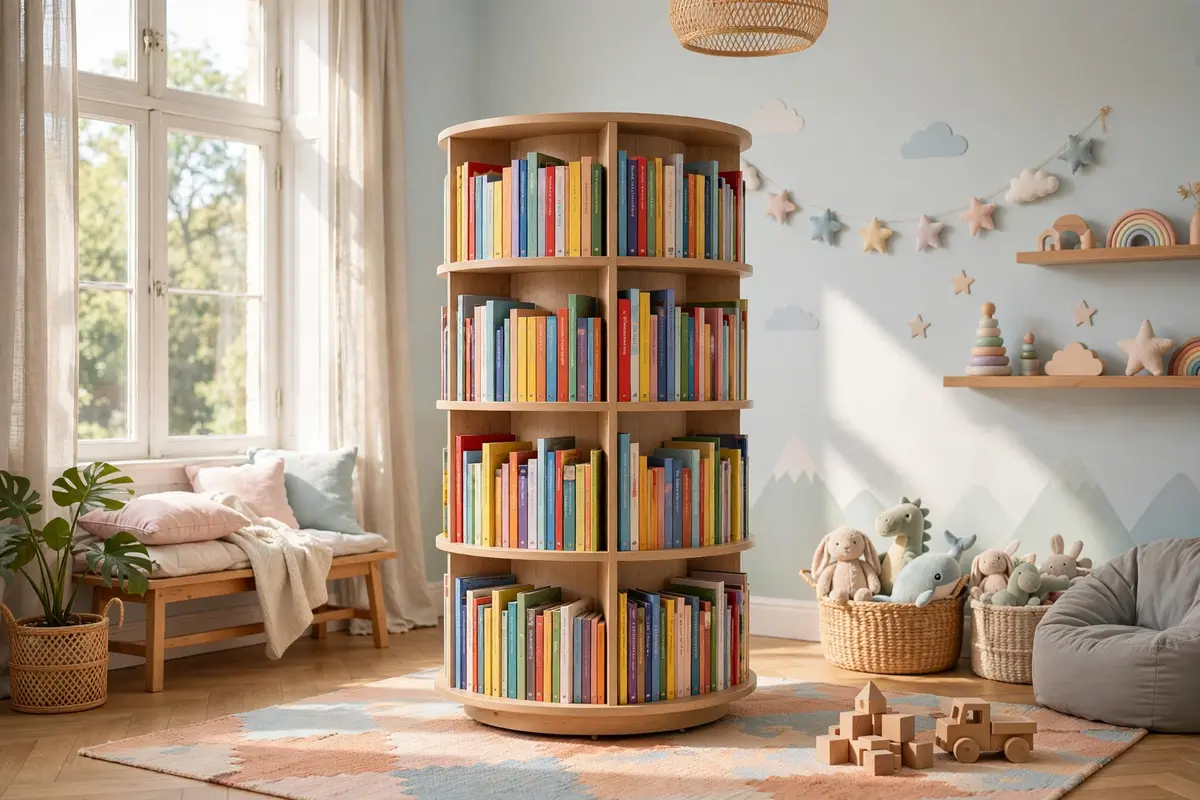
A spinning tower on a lazy-Susan base, with shelves on all four sides — children turn it like a playground roundabout and discover a different set of books on every face. The footprint is tiny (about a square foot) while storage is enormous: a three-tier tower holds 100+ picture books. It suits ages 4–10, and older kids love it for series collections, one series per side. Insist on a tower with a wide, weighted base and smooth rotation; a wobbly spinner teaches children to avoid the shelf, which defeats the entire purpose.
8. The Reading Nook Bookshelf
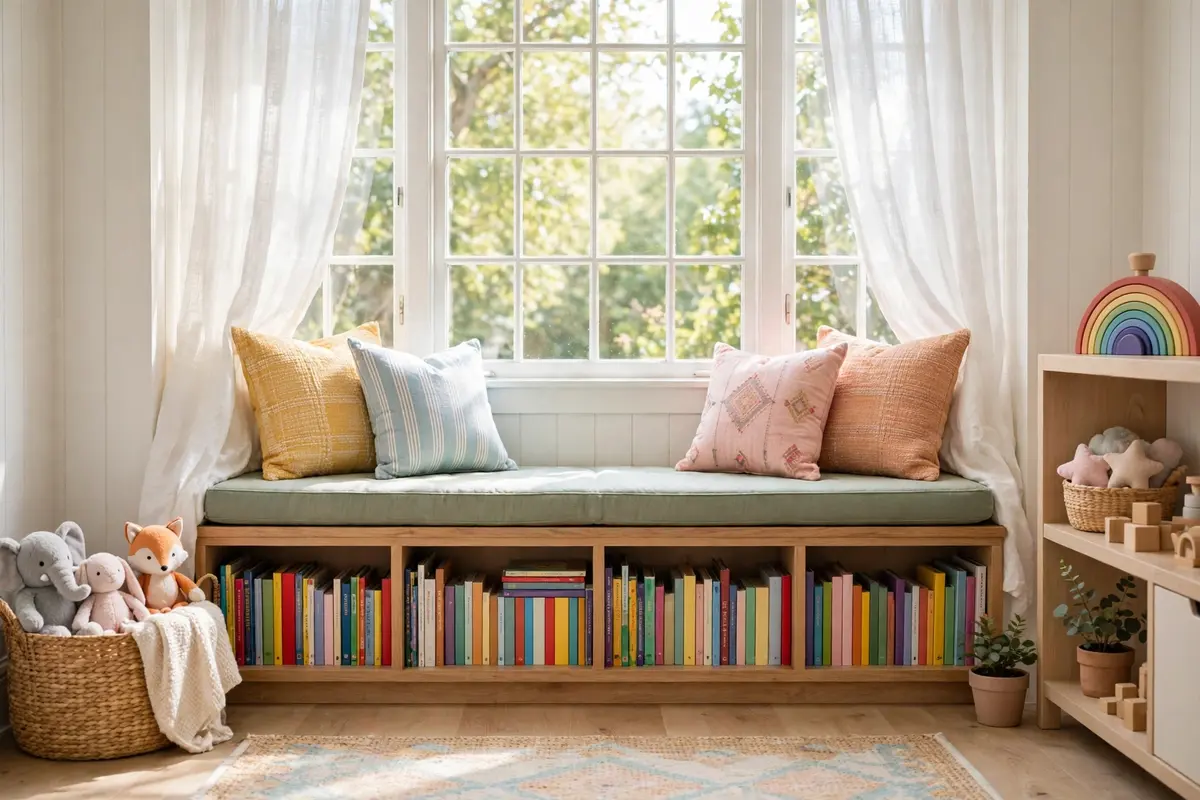
Shelves built around — or under — a window seat or bench: the books live inside the place where reading happens. Cubbies beneath the bench hold the current rotation, a low shelf at elbow height holds favorites, and the cushion on top makes the invitation permanent. This is the most architectural option here, and the one that survives childhood longest: teenagers keep the seat and swap in their own books. If a built-in is too much, fake it — a low bookcase pushed against a daybed or a bench with crate shelves underneath creates the same reading gravity.
9. Cloud and Star Wall Shelves
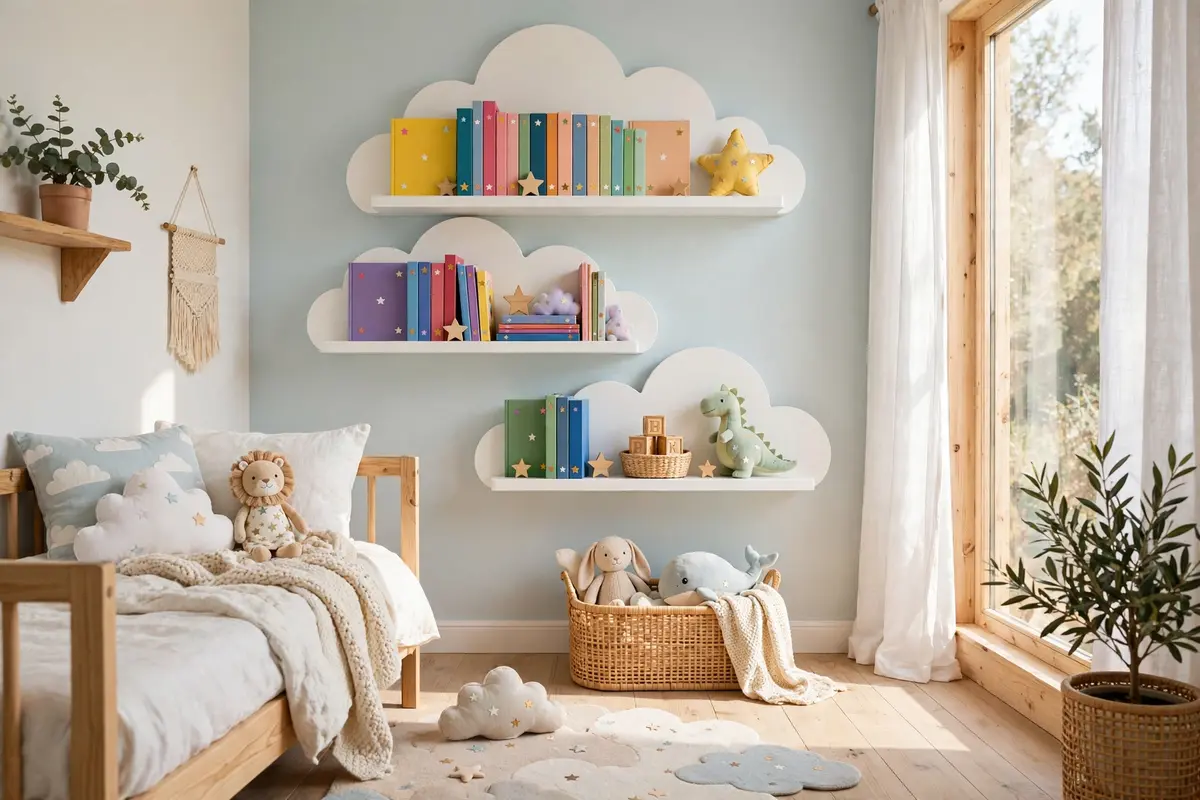
Floating cloud-shaped shelves (with a few stars scattered between) turn an ordinary wall into a sky the books live in. Because they are wall-mounted and modular, clouds are the most flexible design here: start with two above a toddler’s reach-for-play shelf, add more as the collection climbs the wall. They suit nurseries through age 8, hold display copies beautifully face-out, and cost the least of any design on this list — most are simple painted MDF. Keep the everyday reading stock low and let the clouds hold the special, read-together-at-bedtime books.
10. The Boat Bookshelf
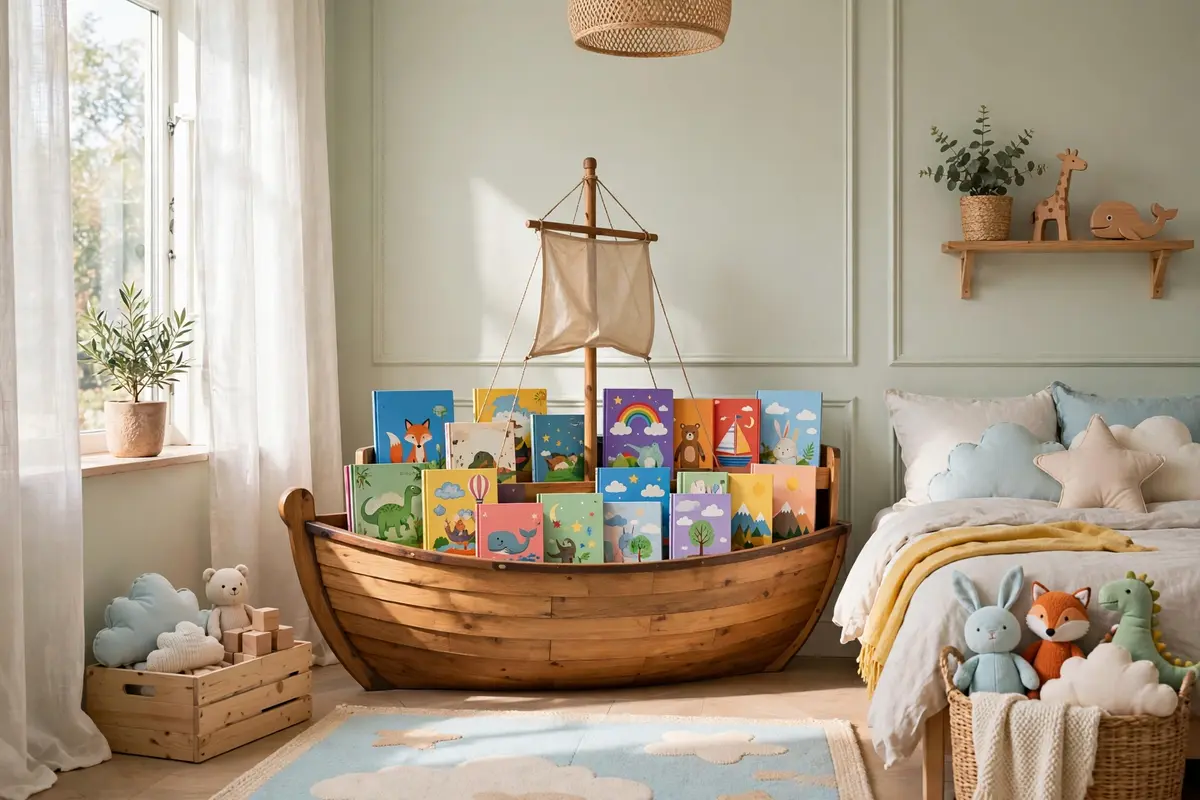
A little boat — hull as the base shelf, mast rising through the middle — sails straight into pirate, ocean, and adventure-themed rooms. The hull’s curve creates one deep low shelf (perfect for big picture books and atlases) with smaller shelves toward the bow. Boat shelves delight ages 3–8 and make a superb themed-room anchor that is not a bed or wallpaper, so the theme can sail away painlessly when tastes change. Natural wood with a navy or red hull stripe is the classic finish; a small fabric sail printed with the child’s name is the finishing touch everyone photographs.
11. The Montessori Front-Facing Book Display
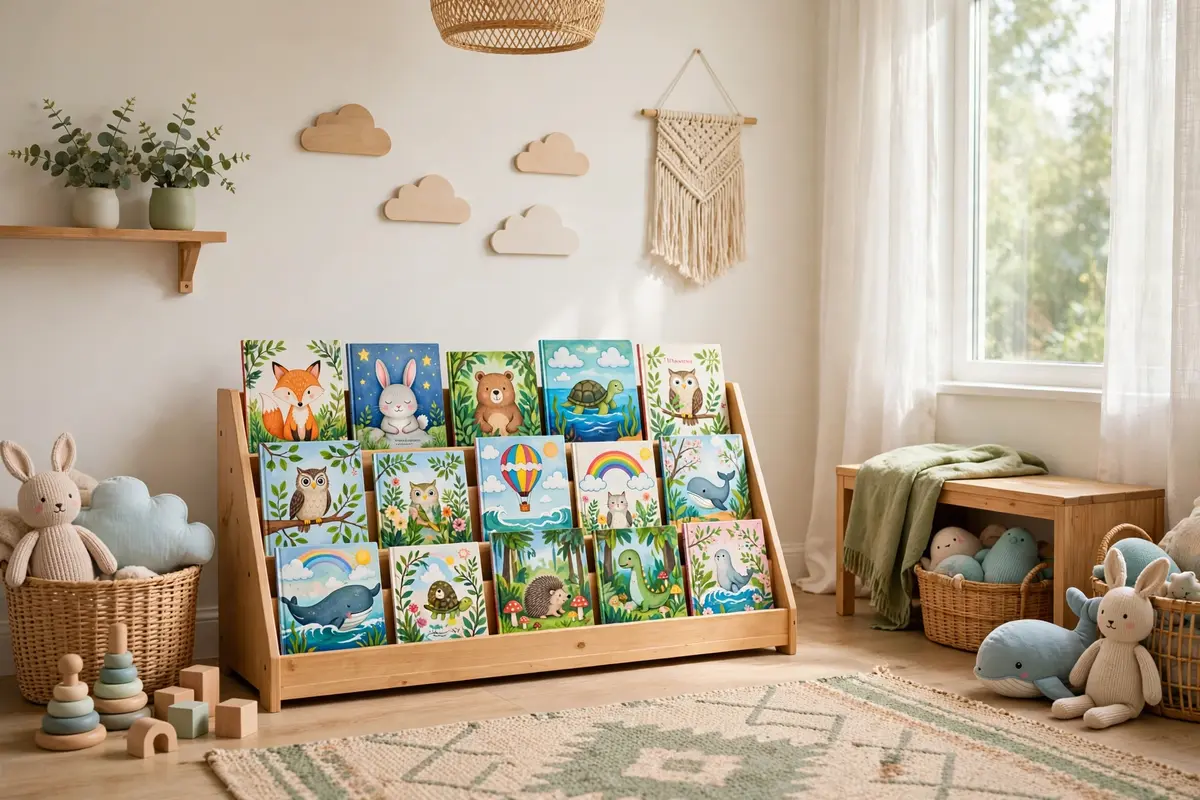
The quiet genius of the list: a low, shallow rack that displays 8–12 books face-out at toddler eye level, covers fully visible. Montessori design trusts the child to choose, and a toddler who can see a favorite cover chooses it. The limited stock is deliberate — rotate weekly from a hidden stash and old books feel new again. Front-facing displays suit ages 1–5 better than any other design here, cost very little, and mount low on the wall or stand on the floor. Many families start here, then graduate to a tree or tower while keeping the display rack for library books.
Choosing the Right One
Match the shelf to the child, not the room photo: toddlers need front-facing and low (designs 5 and 11), preschoolers need theme and invitation (2, 3, 4, 6, 9, 10), and independent readers need capacity and discovery (1, 7, 8). Anchor everything tall, keep the daily books at chest height, and rotate stock to keep the shelf feeling new. Do that, and the whimsical design does the rest — because a bookshelf a child loves looking at is a bookshelf a child uses, and a bookshelf a child uses is the whole point.
Keeping the Magic Alive
A whimsical shelf only works its magic if the books on it keep changing. Set a simple rhythm: every Sunday, swap three or four books with fresh ones from a storage box or the library pile, and let your child choose at least one of the newcomers. Involve them in the shelf’s life in small ways — dusting their castle, re-sorting the rainbow, picking which stuffed animal guards the tree this week. These tiny rituals take five minutes and do the real work of reading promotion, because a shelf a child tends is a shelf a child visits. And when they outgrow a design, pass it on rather than storing it: a bookshelf that made one child love books deserves the chance to do it again.